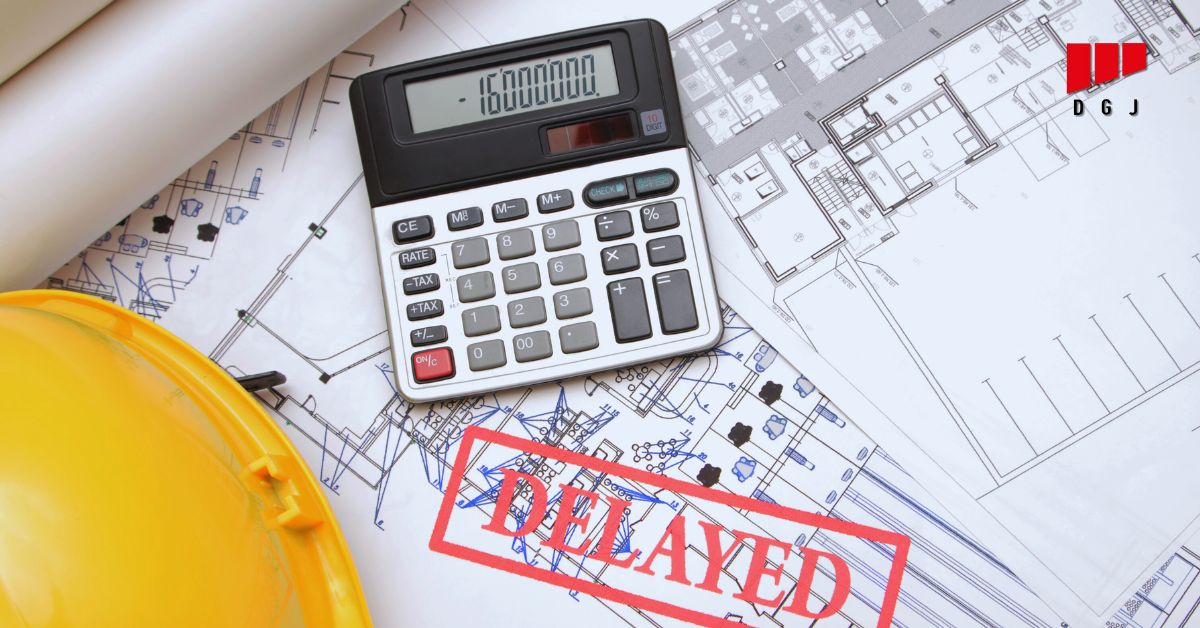
Construction delays are among the most persistent and costly challenges facing the built environment sector. Whether a project involves an airport, hospital, university campus, mixed-use development, infrastructure programme, commercial facility, or residential scheme, a delayed completion can affect every party involved.
For clients, construction delays can postpone operational plans, reduce expected revenue, increase financing costs, and put reputations at risk. For contractors and consultants, delays may create pressure on resources, trigger contractual claims, strain relationships, and reduce profitability. For public-sector organisations and institutions, delayed projects can also affect communities that depend on essential services and facilities.
While some disruption is unavoidable, many construction delays can be reduced through disciplined planning, transparent communication, strong leadership, and independent project oversight. Effective project management gives decision-makers greater clarity and control throughout the project lifecycle, helping them identify risks before they become major schedule issues.
At DG Jones & Partners, we understand that successful construction management is about more than completing activities on a programme. It is about protecting the client’s investment, maintaining quality, managing risk, and ensuring that all stakeholders have the information needed to make confident decisions at the right time.
This guide explores the common causes of construction delays and explains how robust project management practices can keep complex developments moving forward.
To reduce construction delays, project teams must first understand why they occur. Delays are often described as unavoidable, particularly on large or technically complex schemes. However, many are linked to preventable issues such as incomplete planning, unclear responsibilities, late decisions, poor coordination, insufficient resources, or weak change control.
A delay rarely has one simple cause. More often, it develops through a series of connected problems. A late design decision may delay procurement. Delayed procurement may affect a contractor’s work sequence. That disruption may then affect other trades, inspections, commissioning activities, and the final handover date.
Common causes of construction delays include:
Poor planning is frequently the foundation of later disruption. When an initial programme assumes that approvals will be immediate, materials will arrive exactly when required, labour will be continuously available, and site conditions will be straightforward, it does not provide a dependable basis for delivery.
A project programme must reflect the practical realities of construction. It should account for design development, regulatory processes, procurement lead times, mobilisation, temporary works, testing, inspections, commissioning, and handover. Without this level of detail, teams can find themselves reacting to problems instead of managing them.
Communication failures are also a major contributor to construction delays. Construction projects involve clients, project managers, cost consultants, architects, engineers, contractors, subcontractors, suppliers, regulators, and specialist advisers. If instructions are unclear, documents are outdated, or decisions are not communicated promptly, the project can lose momentum quickly.
Understanding these root causes enables project teams to take preventative action. Rather than treating delays as isolated events, effective project management examines the systems, decisions, and dependencies that created the risk in the first place.
Effective project management provides the structure needed to confidently manage a complex construction programme. It connects the client’s objectives to the day-to-day work across design, procurement, construction, commissioning, and handover.
A skilled project manager does not simply monitor progress. They establish clear governance, coordinate multiple workstreams, identify emerging risks, facilitate informed decisions, and maintain accountability across the project team. Their role is to ensure that time, cost, quality, scope, risk, and stakeholder expectations remain aligned.
Construction delays are less likely when a project begins with a clear brief and measurable objectives. The client’s requirements should be documented early, including the intended scope, quality standards, budget, programme expectations, sustainability priorities, operational needs, and key milestones.
This early clarity helps prevent confusion later. When the project team understands what success looks like, it can make better decisions throughout the delivery process.
A strong project management approach includes:
The value of independent project oversight is particularly important on high-value or high-profile projects. Clients need reliable advice focused on their interests, rather than on the priorities of a particular contractor or supplier. An independent construction consultancy can provide an objective analysis of progress, programme risks, contractual issues, cost implications, and proposed solutions.
DG Jones & Partners supports clients with an ethics-driven, independent approach to construction and project management. By combining international expertise with local market awareness, our multidisciplinary teams help clients maintain oversight and make decisions grounded in evidence, transparency, and long-term value.
This approach transforms project management from an administrative function into a strategic safeguard for the client’s investment and reputation.
A realistic programme is one of the most effective tools for preventing construction delays. It provides a structured roadmap for the project, clarifies the order of activities, identifies dependencies, and gives the team a shared view of what must happen to achieve on-time completion.
The programme should begin with a Work Breakdown Structure, often known as a WBS. This breaks the overall project into manageable packages of work, allowing the team to identify individual tasks, responsibilities, resources, durations, and dependencies.
For example, a building cannot progress to internal finishes until the relevant areas are weather-tight and key services have been installed. In turn, those activities depend on structural completion, materials availability, approved designs, and access for the appropriate trades. A well-developed programme makes these relationships visible.
Critical path analysis is also essential. The critical path identifies the sequence of tasks that directly determine the project’s completion date. If an activity on this path is delayed, the overall completion date is likely to be pushed back unless corrective action is taken.
Project managers should review the programme regularly to assess:
A reliable programme must also include a reasonable contingency. Allowances for weather disruptions, inspection requirements, supply chain variability, and minor design coordination issues can prevent small setbacks from becoming significant construction delays.
It is also important to avoid the planning fallacy, which occurs when teams underestimate the time needed to complete tasks. Optimism is valuable, but programmes should be evidence-led. Reviewing comparable past projects, consulting specialist contractors, and assessing current market conditions can yield more accurate duration estimates.
A programme should not be treated as a static document produced at the start of a project. It must be a live management tool that is updated, reviewed, and used to guide practical decisions throughout the construction lifecycle.
Clear communication is fundamental to reducing construction delays. A detailed programme will have limited value if team members are unclear about their responsibilities, do not receive timely information, or work from inconsistent documents.
Every construction project should have a defined communication structure. This should establish who is responsible for making decisions, approving changes, issuing instructions, reporting progress, and escalating risks. It should also define how frequently the team will meet and what information must be included in project reports.
A coordinated communication strategy can include:
Centralised digital platforms are particularly valuable because they provide a single source of information. Drawings, specifications, site reports, programme updates, cost reports, instructions, change requests, and meeting records can be accessed by authorised stakeholders in one location.
This reduces the risk of teams relying on outdated drawings or incomplete information. It also improves auditability, as stakeholders can see when documents were issued, reviewed, approved, or amended.
Communication must also be timely. A delayed answer to a technical query can hold up a work package, leave a subcontractor unable to proceed, and affect multiple downstream activities. Project teams should establish response times for key decisions and monitor whether these are being met.
The culture of communication matters as much as the process. Workers, consultants, and contractors should feel able to raise concerns early. A team that hides problems until a formal reporting date makes it harder to protect the programme. A team that communicates openly can investigate issues, agree on corrective actions, and minimise disruption.
Effective communication supports confidence, clarity, and control. These are essential qualities for clients managing complex assets with significant financial, operational, and reputational implications.
Every construction project involves risk. The objective is not to eliminate uncertainty entirely, but to identify potential problems early, assess their likely impact, and implement practical measures to reduce their effect on the programme.
A structured risk management process starts during project planning. The project team should identify risks relating to the site, design, funding, procurement, programme, regulatory approvals, resources, market conditions, safety, sustainability, and stakeholder requirements.
Each risk should be assessed according to its likelihood and potential impact. The team can then determine whether the risk should be avoided, reduced, transferred, accepted, or monitored.
For example, if a project depends on an imported specialist product with a long manufacturing lead time, the client and project team may consider several mitigation measures. These could include early procurement, approval of an alternative product, engagement with additional suppliers, phased installation planning, or secure storage arrangements upon the materials' arrival.
Typical risk mitigation strategies include:
Risk management should continue throughout the project, not only during the pre-construction stage. The risk register should be reviewed at regular intervals and updated when circumstances change.
Digital reporting and programme monitoring tools can help identify early warning signs. If progress data shows repeated slippage in a particular trade package, managers can investigate before that issue affects critical activities. They may reallocate resources, revise work sequences, increase supervision, secure additional materials, or agree on a recovery plan with the contractor.
When risk management is embedded in the project culture, it becomes a practical defence against construction delays rather than a document that is filed away after the first meeting.
Technology has enhanced how construction projects are planned, monitored, and managed. When used alongside experienced professional judgement, digital tools can improve visibility, coordination, accountability, and decision-making.
Project management platforms allow stakeholders to review live programmes, share documents, track actions, record approvals, and monitor project risks. This creates greater transparency across the delivery team and helps prevent information silos.
Building Information Modelling, commonly known as BIM, can also help reduce construction delays. BIM allows project teams to coordinate design information through intelligent 3D models. These models can help identify clashes between structural, architectural, and building-services elements before work reaches the site.
Detecting a clash during design coordination is far less disruptive than discovering it after installation has started. BIM can also support sequencing, logistics planning, cost management, material coordination, and lifecycle asset information.
Drones, digital site capture, sensors, and progress-tracking technology can provide frequent and accurate records of site activity. These tools may help teams assess actual progress against planned progress, identify access constraints, track material storage, and monitor work completed in difficult-to-reach areas.
However, technology does not replace capable project leadership. Data is only useful when it is interpreted correctly and translated into timely action. The strongest outcomes come from combining modern systems with experienced professionals who understand construction methodology, contractual obligations, local conditions, and client priorities.
DG Jones & Partners combines technical expertise, disciplined governance, and innovative project tools to help clients maintain an informed view of programme performance. This gives stakeholders greater confidence that risks are visible, decisions are documented, and interventions are made at the appropriate time.
Scope changes are a frequent source of construction delays. A client may need to revise operational requirements, update finishes, introduce new sustainability measures, respond to regulatory feedback, or adapt to a changing market need. These changes may be necessary, but they must be managed carefully.
Uncontrolled change can lead to rework, procurement issues, cost increases, disputes, and programme disruption. A seemingly minor change may have wider consequences if it affects structural elements, building services, approvals, specialist suppliers, or completed work.
A formal change-control process should require every proposed change to be documented, assessed, and approved before implementation. The assessment should consider:
This process ensures that clients can make informed decisions. It also prevents contractors and consultants from proceeding with assumptions that may later create disagreement.
Transparent change management protects all parties. It gives the client control over decisions while allowing the project team to understand the full implications before committing resources. Where a change cannot be avoided, early assessment and clear communication can significantly reduce the risk of construction delays.
Construction projects involve a wide range of stakeholders, including clients, investors, lenders, end users, public authorities, contractors, consultants, local communities, regulators, and suppliers. Each may have different priorities, but their actions can affect the project programme.
Poor stakeholder management often results in late decisions, conflicting instructions, disputed expectations, or approval bottlenecks. These problems can be avoided through early engagement, clear governance, and transparent reporting.
From the outset, project managers should establish stakeholder expectations around scope, programme, budget, quality, risk, sustainability, and decision-making responsibilities. It is better to communicate realistic expectations early than to present an overly optimistic programme that later becomes difficult to achieve.
Clients also benefit from an adviser who is independent of the supply chain. Independence helps ensure that recommendations are made in the client’s best interests, with a clear focus on risk reduction, value, compliance, and programme certainty.
DG Jones & Partners is a trusted partner for clients who need confidence when navigating complex construction decisions. With experience supporting significant built assets across more than 70 countries, the practice combines international standards, local insight, technical capability, and ethical independence.
For risk-aware developers, institutions, governments, and private organisations, this approach provides assurance that their interests are protected throughout the asset lifecycle. It supports transparent decision-making and helps create the conditions required to deliver projects on time, within budget, and to the required quality standards.
The impact of construction delays extends far beyond a revised completion date. Even a short delay can create financial, operational, contractual, and reputational consequences.
Additional costs may include extended site overheads, staff costs, equipment hire, temporary works, security, insurance, financing, accommodation, and professional fees. Clients may also experience lost rental income, delayed operational revenue, postponed service delivery, or disruption to planned occupancy.
Construction delays can create contractual claims and disputes. Parties may seek extensions of time, additional payment, compensation for disruption, or damages related to late completion. Resolving these matters requires time, evidence, professional advice, and management attention.
Reputation is another important consideration. A delayed project can affect the confidence of investors, users, communities, and future clients. For contractors and consultants, repeated programme failures may make it more difficult to secure future opportunities.
Effective project management protects more than the immediate programme. It helps preserve relationships, improve project outcomes, safeguard investment, and support the long-term reputation of everyone involved.
A culture of accountability is one of the strongest protections against construction delays. It encourages people to take ownership of their commitments, raise issues early, and focus on solutions.
Accountability begins with leadership. Project leaders must establish clear expectations around quality, safety, programme performance, communication, and reporting. They should also ensure that each work package has an identified owner responsible for progress and escalation.
Regular performance reviews can help teams understand what is working well and where improvement is needed. These reviews should focus on facts, actions, and learning rather than blame.
Training is equally important. Teams that understand scheduling principles, risk management, document control, change procedures, and coordination methods are better equipped to prevent delays. Investment in professional development improves consistency and strengthens the project team’s ability to respond to challenges.
Recognition also has a role. Acknowledging teams that meet milestones, resolve complex problems, or improve coordination reinforces positive habits and demonstrates that programme discipline is valued.
When accountability becomes part of the culture, construction delays become easier to identify, address, and prevent. Teams are more likely to act early, collaborate effectively, and remain focused on the client’s objectives.
Construction delays can disrupt timelines, increase costs, and damage reputations, but they are not unavoidable. With proper planning, clear communication, and strong leadership, projects can remain on schedule and within budget.
Effective project management provides structure, foresight, and collaboration. It transforms potential setbacks into opportunities for improvement and strengthens trust among clients, contractors, and partners.
At DG Jones & Partners, we recognise that time is one of the most valuable assets in the construction industry. Our expert construction management services are designed to help you minimise delays, manage costs effectively, and deliver projects with confidence.
Contact DG Jones & Partners today to see how we can help you succeed with professional construction management services.
Construction delays are often caused by poor planning, miscommunication, labour shortages, and supply chain issues. External factors like weather or unexpected site conditions can also slow down progress if not anticipated early.
Strong project management brings structure, clear communication, and accountability to every stage of construction. By planning carefully and addressing risks early, managers can keep projects on schedule and minimise downtime.
Yes, modern tools like project management software, drones, and real-time tracking systems improve coordination and visibility. These technologies help identify problems early, allowing teams to act before delays escalate.
When information is unclear or delayed, teams often make mistakes or wait for direction, which slows progress. Consistent updates and transparent communication channels keep everyone aligned and prevent costly misunderstandings.
The key is to respond quickly and communicate openly with all stakeholders. Reviewing the cause, adjusting the schedule, and reallocating resources can help the project get back on track efficiently.