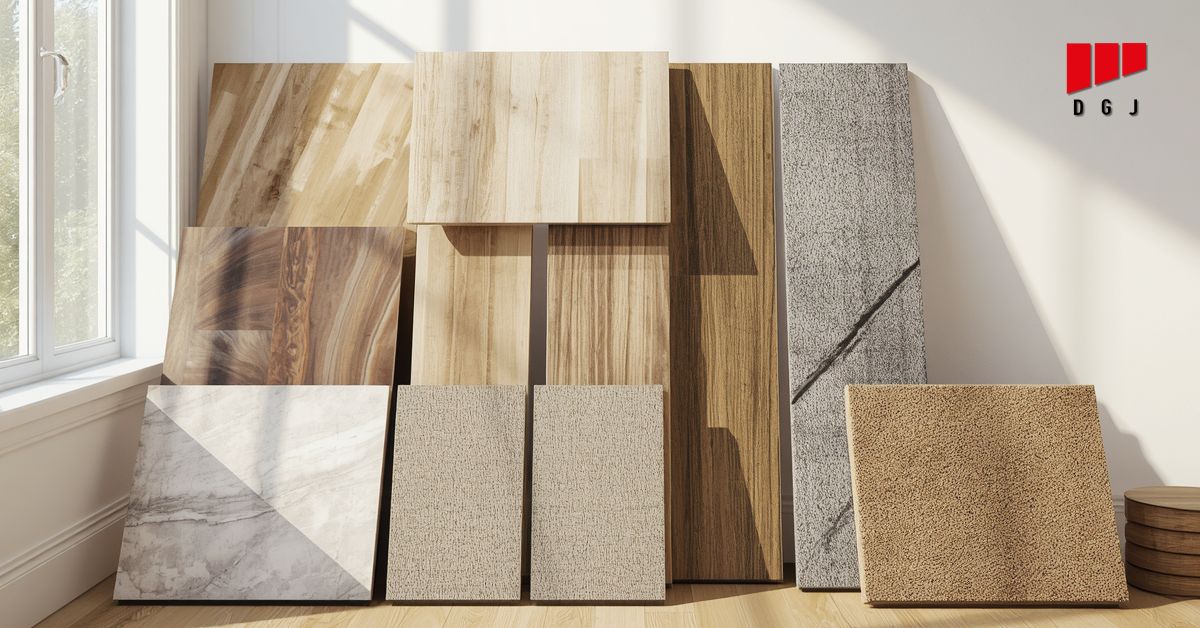
Quantity surveying floor finishes options may sound like a narrow topic, but in practice, they shape how a space looks, feels, performs, and costs over the life of a building. When you prepare or review a Bill of Quantities (BOQ), the way these options are described, measured, and priced can influence project risk and profitability long before any work starts on site.
In quantity surveying, floor finishes options are the different materials and build-ups that form the final walking surface in a building, each described and measured as separate items in the BOQ. When we talk about quantity surveying floor finishes options, we refer to the full range of possible floor systems that may appear in the finishes section, along with their substrates, accessories, and performance requirements.
These options are more than design choices. For a quantity surveyor, work packages carry quantities, units, and rates. Typical floor finishes in a BOQ include:
Each of these quantity surveying floor finish options will usually be broken down into separate items based on room type, finish type, and build-up. What reads to an end user as “tiles” may be 3 or 4 BOQ items: backing screed, waterproofing, tile bed, tiles and grout, plus skirtings and trims.
Understanding these separate components is essential if you want to read or prepare a BOQ that reflects the actual scope of work.
When a BOQ is well-structured, it places floor finishes under a dedicated section, such as “Finishes” or “Flooring.” Each item has a clear description, a unit (square feet or square meters for areas, linear feet or meters for skirtings, number for thresholds and trims), a quantity, and a rate. If you are serious about quantity surveying floor finishes options, this structure is your starting point.
A key part of working with quantity surveying floor finishes is knowing which types are common and how they behave in different settings. A simple way to think about them is by category and typical use:
From a quantity surveying perspective, each of these floor finishes carries a different risk. Some floor finish options in quantity surveying are sensitive to substrate quality, moisture, and temperature. Others are robust but expensive to repair if damaged. When you prepare a BOQ, you are not simply listing material names. You are building a risk map, item by item.
Measurement and description are the backbone of quantity surveying floor finishes options. Even the best drawing set is not enough if the BOQ does not translate design intentions into clear, measurable work.
Most measurement methods set rules for measuring floor finishes. The details vary by country and standard, but typical principles include:
When dealing with quantity surveying floor finishes, it is important to understand how openings and fixed furniture are treated. Not deducting a large recess or leaving out repeated service risers can inflate the quantity and throw off the estimate. On the other hand, spending time deducting tiny holes that the rules already allow you to ignore is wasted effort.
A BOQ item for floor finishes should do more than name the visible surface. A clear description typically includes:
For example, instead of “ceramic floor tiles,” a clearer description might be:
“Floor finish: 24 in x 24 in porcelain tiles, slip-resistant surface, laid on 1 in cement sand screed with flexible adhesive, joints grouted, including cleaning after installation.”
In a detailed BOQ, the screed may be a separate item, and the description would say “laid on screed measured separately.” Both approaches are part of the quantity surveying floor finishes options, and the choice depends on the level of detail and the local measurement method.
Many disputes come from short, vague descriptions that push key information into “specification by reference.” Simple, complete descriptions make life easier for everyone and protect both the client and the contractor.
Designers often lead material choices, but anyone focused on quantity surveying floor finishes options needs to translate those choices into performance and cost over time.
A basic comparison of two finishes might focus only on the rate per square foot. A more useful comparison looks at:
For example, a simple vinyl finish may have a lower rate than a more robust LVT with a thicker wear layer. However, if the space has heavy foot traffic or rolling loads, the cheaper option may wear out and need replacement much sooner. In that case, the higher rate could be a better value.
Similarly, a natural stone floor might cost more than porcelain tiles, but in some high-end spaces, the stone may boost perceived value, reduce the need for frequent refurbishment, or align better with the project’s brand. When you look at quantity surveying floor finishes options through a long-term lens, you are not only comparing rates. You are comparing service lives and maintenance strategies.
Each area in a building has a primary use. When you select or review quantity surveying floor finishes options, consider questions like:
By cross-checking each room or zone against these questions, you can quickly see whether the proposed floor finishes options are appropriate. A glossy tile in a wet ramp may be a red flag. A thin carpet in a high-traffic corridor may later be seen as a maintenance issue. A seamless resin floor in a food preparation area may cost more initially, but it helps prevent many cleaning and hygiene issues.
Quantity surveying floor finishes options should help the team see these tradeoffs clearly, not hide them in a single rate.
The takeoff process is where quantity surveying floor finishes options move from drawings and specs into actual numbers. It is both technical and methodical.
A typical workflow for floor finishes might include:
Both manual and digital methods support this process. On-screen takeoff tools can speed up the work, especially when you handle many quantity surveying floor finishes options across large projects. However, the logic remains the same.
Pricing is where quantity-surveying floor-finish options translate into actual money. A unit rate for a floor finish is usually a combination of several cost components.
A typical rate for a floor finish might include:
For example, a rate for porcelain tiling will consider the cost per box, the number of tiles needed per square foot, including waste, the installation time per installer, and any premium for more complex layouts. A rate for timber flooring will include the boards, underlay, fixings, and the extra time required to handle cuts around door frames and other details.
When comparing quantity surveying floor finish options, it is important to understand how these rates are built up. A very low rate might indicate that a contractor plans to use cheaper materials, lower labour productivity, or recover costs through other related items.
Not all floor finish options in quantity surveying are equally easy to install. Some patterns and layouts increase on-site waste and time. Examples include:
If your design includes these features, the waste allowance and labour time should reflect that. A simple grid layout may need only a modest waste percentage, while a diagonal layout in tight rooms could require a higher allowance.
Recognising these differences when you prepare or review rates helps keep your cost plan realistic.
Improving the quantity surveying of floor finishes is not only about getting the math right. It is about making the BOQ a clear and reliable tool for decision-making, tendering, and contract management.
You can improve your floor finishes BOQs by:
The more transparent your quantity surveying floor finishes options are, the easier it is for contractors to price accurately and for clients to compare bids.
Designers can support better quantity surveying floor finishes options by:
When information is consistent, the quantity surveyor can convert design decisions into BOQ items without guessing.
Clients and project managers can raise the standard of quantity surveying floor finishes options by:
A small amount of attention early in the process can prevent a lot of confusion when bids arrive or when work is underway.
Quantity surveying floor finishes options bring together design ambition, functional needs, and financial reality. When you handle them well, you support better decisions at the design stage, more accurate pricing at the tender stage, and more predictable outcomes during construction and operation.
In practical terms, this means:
If you treat quantity surveying floor finishes options as a strategic part of your bill of quantities rather than a simple list of materials, you create a stronger basis for negotiation, value engineering, and long-term asset performance.
To put this into practice on your next project, contact DG Jones & Partners to see how we can help you succeed with construction quantity surveying and turn your floor finishes strategy into a measurable advantage.
It refers to the full range of floor materials and build-ups (tiles, vinyl, timber, carpets, screeds, coatings, and accessories) that a quantity surveyor measures and prices in the bill of quantities. It is about treating each floor build-up as a clear, defined work item, rather than just a generic label such as “tiles” or “wood”.
Floor finishes often cover large areas and rely on materials with very different costs and lifespans, so small errors in quantities or descriptions can have a major impact on the project budget. They also affect safety, comfort, and appearance, making them a frequent source of design changes and potential disputes when the scope is not clearly defined.
Descriptions should go beyond simply naming the material. They should include size or thickness, substrate or screed, method of fixing, and any key performance requirements such as slip resistance or hygiene. The aim is to provide enough detail so that all tenderers price the same system rather than rely on their own assumptions.
Common mistakes include double-counting or omitting areas, vague descriptions like “as per architect”, and failing to separate different build-ups, such as tiles in dry areas versus tiles in wet areas. Another frequent issue is ignoring the waste and additional labour arising from complex layouts, such as diagonal patterns or intricate borders.
Start with the latest drawings and finish schedules, mark each area by finish type, and measure in a consistent, room-by-room manner. Keep clear notes of assumptions, use repeatable methods (manual or digital), and always carry out a final check that every specified finish on the drawings appears as a proper item in the bill of quantities.