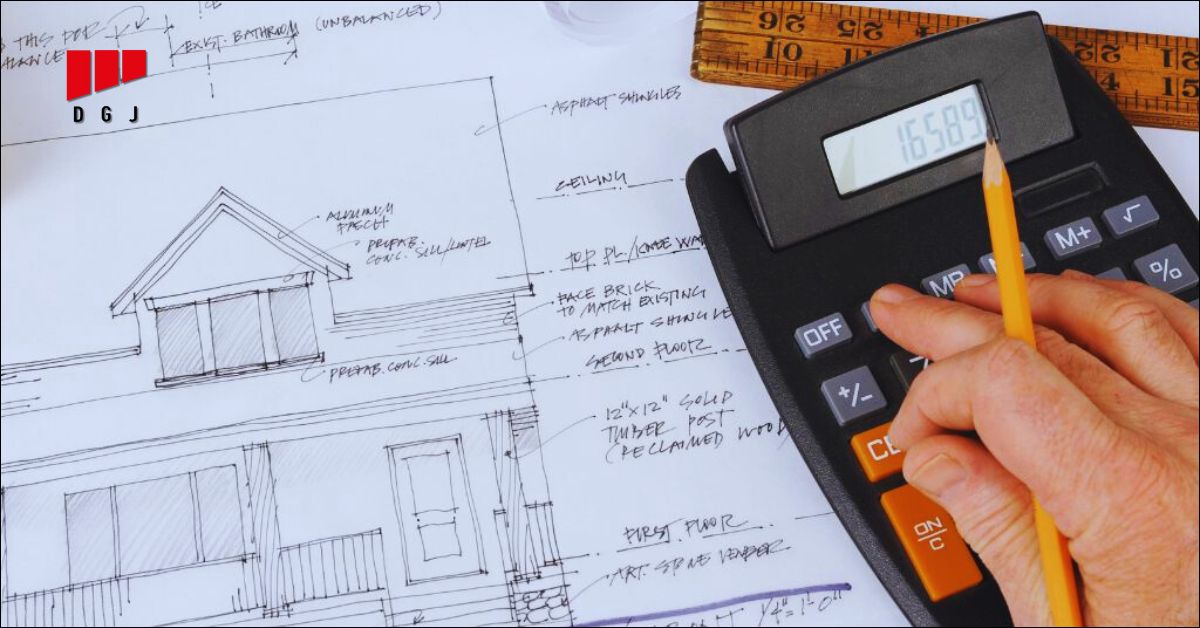
In construction, every successful project begins long before the first brick is laid or machinery arrives on site. It begins with numbers, analysis, and disciplined forecasting. At the centre of this process are cost estimation techniques, which transform an idea into a financially viable plan.
Cost estimation techniques are not simply about predicting expenses. They are about aligning vision with reality, ensuring that every stakeholder, from developers to public institutions, has clarity and control over financial outcomes. In a sector where even minor miscalculations can lead to significant overruns, these techniques form the backbone of responsible project delivery.
For organisations operating in complex and high-value environments, such as DG Jones & Partners, cost estimation is not only technical but strategic. It ensures transparency, reduces risk, and builds confidence across the entire lifecycle of a built asset.
Cost estimation techniques sit at the heart of construction planning and execution. Without them, projects would rely on guesswork rather than structured financial insight.
Accurate estimation provides financial foresight, enabling stakeholders to understand the full scope of investment required. This includes not only the overall project cost but also the distribution of expenditures across phases such as design, procurement, and construction. With this level of visibility, clients can secure funding, allocate budgets effectively, and avoid unexpected financial pressure.
Another critical role of cost estimation techniques is assessing project viability. Before a project progresses to planning approval or tendering, decision-makers must determine whether it is financially feasible. This is particularly important in public-sector development, where accountability and transparency are essential.
In competitive tendering environments, precision in cost estimation can determine whether a bid succeeds or fails. Underestimating costs may result in financial losses or compromised quality, while overestimating can make a proposal uncompetitive. Effective cost estimation techniques allow organisations to strike a balance between competitiveness and profitability.
Risk reduction is another major benefit. Construction projects are exposed to uncertainties such as material price fluctuations, labour shortages, regulatory changes, and unforeseen site conditions. By incorporating contingencies and scenario planning, cost estimation techniques help teams prepare for these variables and maintain control over outcomes.
Before applying specific cost estimation techniques, it is essential to understand the fundamental elements of a construction cost estimate.
Together, these components form the foundation upon which all cost estimation techniques are built.
Different projects require different approaches, and experienced professionals often combine multiple cost estimation techniques to achieve the most accurate results.
Analogous estimating is one of the most straightforward cost estimation techniques. It relies on historical data from similar projects to generate a preliminary estimate.
For example, if a developer plans to build a new educational facility, they may analyse the costs of recently completed schools with similar specifications. This approach allows for rapid estimation during early project stages when detailed information may not yet be available.
However, accuracy depends heavily on the comparability of projects. Differences in location, design complexity, or market conditions can lead to significant variations. Therefore, expert judgement is essential when applying this method.
Parametric estimating uses statistical relationships between variables to calculate costs. Common metrics include cost per square metre, cost per unit, or cost per functional element.
This technique is particularly effective for projects with repetitive or standardised components, such as residential developments or office buildings. For instance, if the average construction cost is £1,800 per square metre, a 5,000 square metre building can be estimated at approximately £9 million, subject to refinement.
Parametric models can deliver a strong balance between speed and accuracy, especially when supported by reliable data and benchmarking systems.
Bottom-up estimating is one of the most detailed and accurate cost estimation techniques. It involves breaking a project into smaller components or work packages, estimating each individually, and then aggregating the results.
This method is widely used in large-scale infrastructure projects where precision is essential. Each element, from groundwork to finishing, is analysed in detail, allowing for comprehensive cost control.
Although highly accurate, bottom-up estimating is time-intensive and requires detailed project information. It is therefore best suited to later stages of project development when designs and specifications are well defined.
Three-point estimating introduces a probabilistic approach to cost estimation techniques. It considers three scenarios:
This method helps account for uncertainty and provides a more balanced view of potential costs. It is particularly useful for high-risk elements or early-stage planning where variability is significant.
Unit cost estimating is a practical and widely used technique in construction. It involves determining the cost per unit of work, such as per square metre of flooring or per cubic metre of concrete, and multiplying it by the required quantity.
This approach is highly effective for repetitive tasks and standard construction activities. For example, road construction projects often rely on cost per kilometre or per lane metrics.
The main challenge lies in maintaining up-to-date unit rates, especially in volatile markets. Regular benchmarking and data validation are essential to ensure accuracy.
Despite advances in data analytics and digital tools, expert judgement remains a cornerstone of cost estimation techniques. Experienced professionals bring contextual understanding, industry insight, and critical thinking that cannot be fully replicated by software.
They can identify potential risks, question assumptions, and validate estimates against real-world conditions. In practice, expert judgement often complements other techniques, enhancing both accuracy and reliability.
Even the best technique can falter if real-world variables aren’t taken into account. Here are some key factors that can cause estimates to shift:
A shortage of skilled workers can drive wages up. Similarly, new safety legislation or union negotiations can impact productivity and cost.
Prices for timber, concrete, and especially metals are subject to global trends. Political instability, trade tariffs, or shipping disruptions can send prices skyward overnight.
Poor ground conditions, limited access, or the need for demolition or environmental remediation can add significant cost layers.
The longer a project runs, the greater the exposure to inflation, interest rate changes, or changing regulations. Prolonged builds also increase overheads like site security and project management.
Delays or added requirements during planning approval can result in rework, scope changes, or legal costs—all of which should be built into contingency budgets where possible.
Cost estimation techniques are not merely operational tools. They are strategic instruments that shape decision-making and project outcomes.
A well-prepared estimate demonstrates professionalism and builds trust with clients and stakeholders. It establishes a transparent foundation for financial discussions and reduces the likelihood of disputes.
For organisations like DG Jones & Partners, cost estimation is integral to delivering value across the built asset lifecycle. By combining global expertise with local market knowledge, the firm ensures that projects are managed with clarity, control, and accountability.
Independence from the supply chain further strengthens this approach. Clients benefit from unbiased advice that prioritises their interests, safeguarding both their investments and their reputations.
As construction becomes more complex and clients more demanding, the need for robust, transparent, and flexible cost estimation techniques has never been greater.
Each method offers its own toolkit for navigating uncertainty and delivering value, from top-down shortcuts to bottom-up breakdowns. But no technique exists in isolation. The best estimators combine, adapt, and contextualise them.
Because, in the end, good estimation is about more than precision—it’s about confidence. It’s about looking a client in the eye and saying, “We’ve done our homework.”
At DG Jones & Partners, we understand that construction success starts with clarity. Our cost management consultants bring numbers and knowledge—helping you build smarter, safer, and stronger from day one.
Let's talk if your project demands financial accuracy with insight that only experience can bring.
Common methods include analogous estimating, parametric estimating, bottom-up estimating, three-point estimating, and unit cost estimating. Each method's accuracy and complexity depend on the project's scope and stage.
To estimate construction costs, you identify the scope of work, break it into components, calculate quantities, apply unit rates for materials and labour, and factor in overheads, contingencies, and profit margins.
A basic formula is:
Total Cost = (Quantity × Unit Rate) + Overheads + Contingency + Profit.
In probabilistic models, a common formula is the three-point estimate: (Optimistic + 4 × Most Likely + Pessimistic) ÷ 6.
The five main types are: direct costs, indirect costs, fixed costs, variable costs, and contingency costs. Each helps in capturing the full financial scope of a construction project.
Unit cost estimating is frequently used in building construction due to its simplicity and relevance for repetitive tasks, though bottom-up estimating is preferred for larger or more complex projects requiring detailed breakdowns.