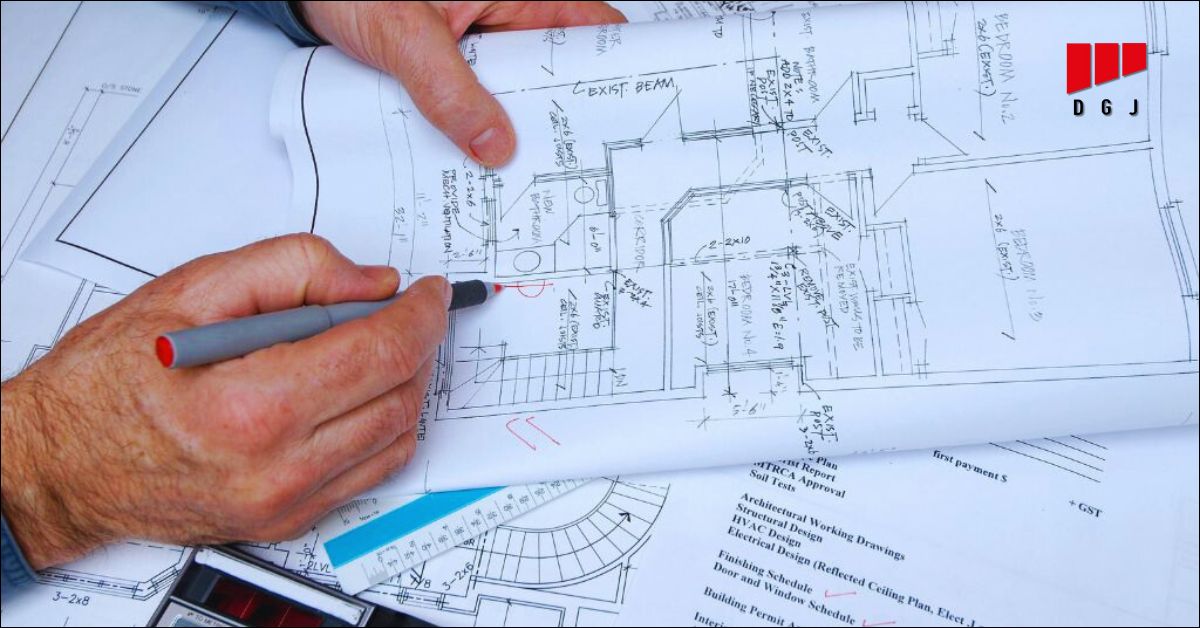
Cost estimation in construction project management is one of the most important disciplines for achieving successful project outcomes. Before a school, hospital, airport, office building, bridge, masterplan or housing development can move forward with confidence, decision-makers need a clear understanding of the likely financial commitment involved.
A reliable cost estimate provides much more than an expected project price. It gives clients, funders, consultants and delivery teams a structured basis for planning, decision-making, risk management, and the protection of an investment's value throughout the asset lifecycle.
For complex construction schemes, inaccurate or incomplete estimates can create serious difficulties. Projects may encounter funding gaps, programme delays, disputes, procurement challenges and pressure to reduce quality. In contrast, robust cost estimation in construction project management helps teams establish a realistic financial strategy, respond to change with greater control and maintain stakeholder confidence from concept through to completion.
At DG Jones & Partners, cost management is approached with independence, professional rigour and a clear commitment to protecting the client’s interests. By combining global experience, local market knowledge and established international standards, the team helps clients gain clarity over project costs while managing uncertainty in a transparent and practical way.
Cost estimation in construction project management is the process of forecasting the financial resources required to deliver a construction project. It considers the anticipated costs from the earliest feasibility stage through design, procurement, construction, handover and, where required, long-term asset operation.
A construction cost estimate may include the cost of materials, labour, plant, equipment, specialist subcontractors, temporary works, site facilities, professional services, statutory approvals, insurance, taxes, risk allowances and project overheads. The exact level of detail depends on the stage of the project and the quality of information available.
Cost estimation should not be confused with a project budget. An estimate is an informed forecast based on drawings, specifications, market data, assumptions and identified risks. A budget is the financial limit approved by the client or funding body. The estimate helps establish that budget, but it should also be reviewed and refined as the scope develops.
For example, an early estimate for a proposed university campus may be based on floor area, benchmark data and broad assumptions about construction standards. As the design progresses, the estimate can be developed into a detailed cost plan that reflects structural systems, building services, finishes, specialist equipment, external works and procurement requirements.
Effective cost estimation in construction project management, therefore, gives the client a more reliable view of affordability. It identifies where important financial decisions need to be made and helps prevent a project from advancing with unrealistic expectations.
Cost estimation directly influences whether a project is viable, fundable, and deliverable. It supports financial control, but it also shapes design decisions, procurement strategy, programme planning and risk management.
A project team cannot make fully informed choices without understanding the cost implications of those choices. Selecting a premium façade system, changing the structural approach, accelerating the programme or adding specialist facilities can all affect the project’s financial position. Early visibility of these impacts allows the client to make decisions based on value, long-term performance and available funding.
High-quality cost estimation in construction project management creates a framework for disciplined decision-making. It enables project leaders to compare options, assess risks and maintain alignment between the client’s ambitions and the available budget.
Key benefits include:
For public sector bodies, institutions and private developers, these benefits can be particularly important. High-profile projects often face heightened scrutiny, demanding governance requirements and a wide range of stakeholders. Clear, independently prepared cost information provides greater assurance that expenditure is being managed responsibly.
A realistic budget starts with a robust estimate. If early cost assumptions are too optimistic, the project may proceed into detailed design without sufficient funding. By the time the financial shortfall becomes clear, the client may need to reduce the scope, delay procurement, seek additional finance or redesign key elements of the scheme.
These changes can be costly in themselves. They may also affect programme certainty, stakeholder confidence and the intended quality of the completed asset.
Cost estimation in construction project management helps avoid this position by testing affordability at regular stages. A professional cost consultant can assess whether the emerging design remains within the approved cost limit and identify the factors driving expenditure.
For instance, a client planning a new hospital may need to balance clinical requirements, resilience standards, specialist medical equipment, energy performance and future expansion needs. Each requirement has cost implications. An early cost plan helps the client understand the financial effect of these decisions and establish priorities before design work progresses too far.
A well-managed budget should also take account of the timing of expenditure. Construction projects require cash to be available at the appropriate stages, including design development, enabling works, procurement, construction and commissioning. Accurate forecasting supports better financial planning and reduces the risk of disruption caused by delayed payments or funding constraints.
Construction costs and construction programmes are closely connected. Delays often lead to additional expense, while poor cost planning can prevent the timely procurement of labour, materials, equipment and specialist services.
A detailed estimate identifies the resources required to complete each element of the work. This allows project managers to coordinate procurement activities, establish realistic delivery periods and understand where supply chain pressures could affect cost or time.
For example, certain materials and building systems may have long lead times. Mechanical and electrical equipment, bespoke steelwork, lifts, façade components and specialist medical or laboratory installations may need to be ordered well in advance. If these items are not considered early, the programme can be affected and the project may face increased costs due to expedited procurement, extended preliminaries or changes in design.
Cost estimation in construction project management supports programme certainty by ensuring that financial decisions are linked to the practical sequence of construction. It helps teams understand when money needs to be committed, what risks may affect supply and how alternative approaches could improve overall efficiency.
This integrated approach is especially valuable on large or complex projects where multiple work packages must be coordinated. It enables the project team to make more informed choices about phasing, procurement routes, temporary works, site logistics and contractor involvement.
Every construction project involves some level of uncertainty. Material prices can change, labour availability can fluctuate, design requirements can evolve, and unforeseen site conditions can emerge. Planning approvals, utility connections, regulatory obligations and market conditions may also affect the final cost.
A key purpose of cost estimation in construction project management is to identify and quantify these risks early. Instead of treating uncertainty as an afterthought, the project team can develop a considered allowance for risks that are relevant to the specific project.
This often includes a contingency sum. Contingency is not simply extra money added without analysis. It should reflect a structured assessment of potential issues, the likelihood of each issue occurring and its possible financial impact.
Typical sources of cost risk include:
An independent cost consultant can help the client distinguish between risks that can be managed through design and planning, risks that should be allocated through the contract and risks that require a financial allowance.
This gives the client greater control. Rather than being surprised by potential cost pressures later, the team can make informed decisions about whether to accept, mitigate, transfer or retain each risk.
Clients, funders, investors, government bodies and institutional stakeholders need confidence that a project is being managed responsibly. Detailed and transparent estimates provide a clearer picture of how funds will be used and what assumptions sit behind the proposed budget.
This is particularly important where projects involve public funding, complex governance structures or long-term operational responsibilities. A cost plan that clearly explains the scope, allowances, exclusions and risks can support funding applications, board approvals and investment decisions.
Cost estimation in construction project management also helps build trust between the client and the wider project team. When cost information is shared clearly, architects, engineers, project managers and contractors can work towards the same financial objectives.
Transparency is vital. If a project appears to be within budget only because risks, exclusions or future costs have been overlooked, trust can quickly deteriorate when those items emerge. A professional estimate should make the level of certainty clear and communicate the assumptions in plain language.
DG Jones & Partners recognises that clients need more than a single headline figure. They need a reliable explanation of what the figure means, what it covers, where uncertainty remains and what actions are required to protect the budget.
Different estimates are used at different stages of a construction project. Each estimate has a distinct purpose and level of accuracy. As information becomes more detailed, the estimate should become more refined.
Preliminary estimates are prepared during the earliest stages of a project. They may be used to test feasibility, compare potential sites, assess broad development options or support early investment decisions.
These estimates often rely on benchmark data, historical project costs, gross internal floor area, unit rates or high-level assumptions. They are useful when detailed drawings and specifications are not yet available.
Although preliminary estimates are less precise than later-stage estimates, they are still valuable. They help clients decide whether a project is likely to be financially viable before investing heavily in design development.
An elemental cost plan breaks a project into major components, such as substructure, superstructure, internal finishes, building services, external works and preliminaries. This approach allows the project team to assess which parts of the design are driving costs.
Elemental cost planning is especially useful during concept and developed design stages. It supports design decisions by showing the financial impact of different materials, systems and construction approaches.
Detailed estimates are developed when the project information is more complete. They include measured quantities, specifications, current market rates, labour allowances, plant costs, subcontract packages and detailed preliminaries.
This type of estimate is commonly used to support tender documentation, procurement decisions and final budget approval. It provides a stronger basis for evaluating contractor submissions and managing the expected cost of the works.
Bid estimates are prepared by contractors when submitting a tender. They reflect the contractor’s assessment of the work required, including direct costs, overheads, risk allowances and profit.
Clients should review bid estimates carefully, particularly where there are significant differences between tender returns. A low bid may appear attractive, but it can also indicate that the contractor has misunderstood the scope, omitted essential work or adopted assumptions that could lead to claims later.
Control estimates are used during the construction stage. They compare forecast costs with actual expenditure, approved changes, committed costs and remaining budget allowances.
A control estimate helps project managers identify potential overspend early enough to take corrective action. It is a key part of maintaining financial visibility throughout the delivery process.
A complete construction estimate should cover every significant cost associated with delivering the project. Omitting categories can create a misleading impression of affordability and place pressure on the budget later.
Direct costs relate directly to the physical construction work. They commonly include materials, labour, plant, equipment and specialist subcontract packages.
Materials may include concrete, steel, timber, glass, roofing systems, insulation, finishes, mechanical equipment, electrical components and landscaping products. Labour includes the tradespeople, site operatives, supervisors, and specialist installers needed to carry out the work.
Plant and equipment may include cranes, excavators, access equipment, generators, scaffolding, site tools and temporary installations. These items may be hired, purchased or included within a subcontractor’s pricing.
Indirect costs are necessary for project delivery but are not linked to a single construction element. These may include site offices, welfare facilities, security, temporary utilities, project administration, site management, health and safety provisions and quality control activities.
Other indirect costs can include permits, planning obligations, inspections, testing, insurance, statutory approvals and utility connection charges.
Soft costs include the fees and services required to plan, design, manage and protect the project. These may include architecture, engineering, quantity surveying, project management, legal advice, planning consultancy, environmental assessments, surveys, inspections and specialist technical advice.
These costs should be considered from the beginning. A project budget that focuses only on the contractor’s construction price may fail to account for the full investment required.
A contingency allowance provides financial protection against identified uncertainties. The appropriate level depends on the project’s maturity, complexity, procurement route and risk profile.
At an early stage, a higher allowance may be appropriate because there is less certainty about the design and site conditions. As the scope becomes clearer and risks are addressed, the contingency may be refined.
Professional estimators use several methods depending on the stage of the project, the available information and the required level of certainty. The most effective approach often combines more than one method.
Analogous estimating compares the proposed project with similar completed projects. It is useful when only limited information is available and a rapid indication of likely cost is needed.
For example, a client considering a new office development may review the cost of comparable offices with similar quality standards, floor areas and location factors. The estimate can then be adjusted to reflect differences in site conditions, inflation, specification or programme.
This method is efficient, but it depends on the quality and relevance of the reference data.
Parametric estimating uses measurable variables, such as cost per square metre, cost per bed, cost per student place or cost per kilometre. It is often used for projects with repeatable characteristics or for those with established industry benchmarks.
A parametric estimate can provide useful early-stage guidance, particularly for large-scale developments. However, it should be adjusted carefully to reflect the project’s unique requirements, location, specification and risk profile.
Bottom-up estimating involves assessing individual tasks, quantities and work packages before adding them together to calculate the total cost. It is one of the most detailed approaches and is often used when drawings and specifications are sufficiently developed.
This method can offer strong accuracy, but it requires time, detailed information and experienced cost professionals. It is particularly useful before tendering and when establishing a control budget.
Top-down estimating begins with an overall project budget and then allocates that amount across project elements or work packages. It is commonly used for early strategic planning when detailed information is limited.
While this approach can help guide initial decisions, it should be tested and developed further as the project progresses.
Three-point estimating considers three possible cost outcomes: an optimistic estimate, a most likely estimate and a pessimistic estimate. This approach is valuable when there are significant uncertainties.
By considering a range rather than a single figure, the project team can better understand the potential financial exposure and develop more suitable risk allowances.
DG Jones & Partners provides independent cost management and construction consultancy support across the built asset lifecycle. The practice works with public and private clients, institutions, developers and governments seeking greater control over time, cost, quality and risk.
The team combines internationally informed standards with an understanding of local market conditions. This enables clients to receive practical advice that reflects the specific needs of their project while maintaining professional discipline and transparency.
Through cost estimation in construction project management, DG Jones & Partners can support clients with feasibility studies, cost planning, procurement advice, tender analysis, value engineering, cost reporting, change control, contract administration and final account management.
The aim is not simply to produce a cost figure. It is to give clients the confidence to make informed decisions, safeguard investment value and maintain control throughout the delivery process. For complex projects where reputation, public value, sustainability and long-term performance matter, independent and ethical cost advice can make a meaningful difference.
Cost estimation in construction project management is essential for turning ambitious plans into financially controlled, achievable projects. It gives clients and project teams the clarity needed to establish realistic budgets, manage risks, plan resources, assess design decisions and respond to change without losing sight of the project’s objectives.
Accurate estimates are not simply about reducing expenditure. They help achieve the right balance between time, cost, quality, sustainability and long-term asset value. By reviewing costs throughout feasibility, design, procurement and construction, project teams can identify potential issues early and make informed decisions before they affect programme certainty or financial performance.
DG Jones & Partners provides independent, ethics-driven construction cost management support that protects client interests at every stage. With rigorous processes, local market insight and internationally aligned professional standards, our team helps clients gain the clarity, confidence and control needed to deliver complex built assets successfully.
Contact DG Jones & Partners today to discuss your project and see how we can help you achieve stronger construction cost management outcomes.
Cost estimation helps forecast a project's financial requirements. It supports budgeting, design decisions, procurement planning, cash flow management, resource allocation and risk control throughout the project lifecycle.
Cost estimation identifies likely cost pressures and allows the project team to include appropriate risk allowances. It also helps clients assess the financial impact of changes, market conditions, programme delays and other uncertainties before they become difficult to manage.
Common types include preliminary estimates, elemental cost plans, detailed estimates, bid estimates and control estimates. Each is used at a different stage of the project and provides a different level of detail.
A complete estimate should include direct costs such as materials, labour, plant and equipment, as well as indirect costs such as site overheads, permits, insurance, professional fees, statutory charges, risk allowances and contingency.
Bottom-up estimating is generally one of the most detailed methods because it assesses individual quantities, tasks and work packages. However, the most suitable method depends on the available information and the project's stage. Combining methods often produces the most reliable result.