- À Propos De Nous
- Services & Secteurs
- Projets
- Nos Employés
- Perspectives
- Carrières
- Académie DGJ
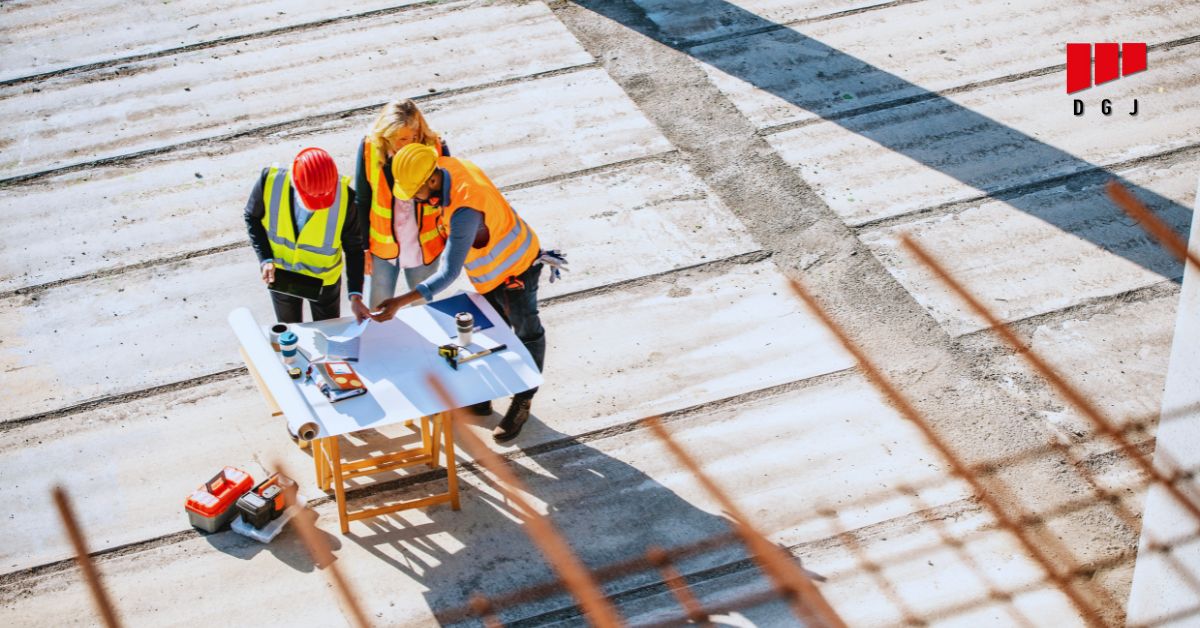
Commercial construction management is essential when a project needs to achieve ambitious operational, financial, and quality objectives within a constrained budget. Whether you are developing an office, healthcare facility, education campus, retail space, industrial building, hotel, mixed-use asset, or public infrastructure, a well-managed process provides the control needed to protect both the investment and the project’s long-term performance.
A tight budget does not automatically mean reduced standards. It means every decision must be well-informed, transparent, commercially sound, and aligned with the client’s priorities. Effective commercial construction management brings together cost planning, programme control, procurement, risk management, technical coordination, contract administration, and stakeholder communication to prevent avoidable losses before they arise.
For developers, institutions, government bodies, investors, and property owners, the central challenge is not simply reducing expenditure. It is ensuring that the available budget delivers the intended value. This requires an independent construction management partner that can challenge assumptions, identify risks early, maintain clear records, and keep the project team focused on the agreed brief.
DG Jones & Partners supports clients throughout the built asset lifecycle, from early feasibility and design development through construction, handover, and in-use management. With experience across major projects and diverse markets, the practice helps clients make decisions with greater confidence, clarity, and control.
Commercial construction management is the professional process of planning, coordinating, monitoring, and controlling a commercial construction project from inception through completion. Its purpose is to help deliver the right quality, within the agreed budget, and by the required completion date.
It covers much more than supervising on-site activity. Strong commercial construction management begins before construction starts, when the project team defines the brief, tests financial viability, assesses risks, selects procurement routes, and establishes a realistic programme. It then continues through design coordination, tendering, contract administration, site reporting, cost control, quality assurance, handover, and final account close-out.
A commercial construction manager may coordinate several interdependent areas, including:
On a tight-budget project, these responsibilities become even more important. A small design oversight, delayed material approval, poorly defined package, or unrecorded variation can create a much larger financial consequence later. Commercial construction management provides the structure required to recognise those risks while they are still manageable.
DG Jones & Partners provides management services for projects that support clients through design and construction, combining project, programme, design, and construction management disciplines to keep delivery aligned with agreed outcomes.
A restricted budget creates less room for error. It does not remove the need for high standards, safety, performance, or regulatory compliance. Instead, it increases the importance of making disciplined decisions at the right time.
Commercial construction projects can experience budget pressure because of:
The most expensive project problems are often not caused by one major event. They develop from a series of small issues that go unaddressed, unrecorded, or unresolved early enough. For example, a delayed design decision may affect procurement. That may delay a specialist package. The delay may then disrupt site sequencing, increase preliminaries, and lead to claims or acceleration costs.
A rigorous commercial construction management process gives clients visibility over these connected risks. It allows the project team to compare actual progress and expenditure against the approved plan, assess the effect of proposed changes, and take corrective action before the budget is compromised.
This is particularly valuable for clients who need an independent adviser to protect their interests. DG Jones & Partners’ approach is rooted in independent professional advice, transparent communication, and disciplined cost and project controls. The firm’s cost management consultancy services support reliable financial decision-making from project inception to completion and operational use.
The most effective way to control costs is to establish clarity before making substantial commitments. A well-defined project brief gives designers, consultants, contractors, suppliers, and stakeholders a shared understanding of what must be delivered, why it matters, and what constraints apply.
The brief should define more than the building’s size or appearance. It should establish the project’s operational, technical, financial, environmental, and programme requirements.
A robust brief should address:
When the brief is incomplete or frequently changes, the design team may develop solutions that do not align with the client’s financial constraints. Contractors may then price uncertainty into their tenders, or construction may begin before key decisions are resolved. Both situations increase the risk of cost escalation.
Commercial construction management should therefore include a structured process for confirming scope, reviewing design development, and documenting client decisions. This does not prevent all changes, but it ensures that each proposed change is assessed for its impact on cost, programme, quality, risk, and operational value.
For complex developments, early project definition should be supported by feasibility studies and cost planning. DG Jones & Partners has supported large-scale projects across sectors and geographies, including education facilities, airports, mixed-use developments, residential communities, and landmark public assets.
Preconstruction is one of the highest-value stages of commercial construction management. It is the period when project teams can most effectively influence costs, because design, procurement, programme, and risk decisions have not yet been fixed in contracts or site works.
Investing time in preconstruction planning can prevent costly redesign, disputes, programme slippage, and rework during construction.
A feasibility study tests whether the proposed project can be delivered within its intended constraints. It should investigate the site, local conditions, design implications, estimated costs, programme viability, approvals, utilities, logistics, and procurement options.
For example, an apparently suitable site may require unexpected demolition, remediation, specialist foundations, infrastructure upgrades, or traffic management measures. Identifying these matters before construction enables the client to budget realistically and adjust the project strategy if needed.
Feasibility work should consider:
A feasibility study should not be treated as an administrative exercise. It is a decision-making tool that enables clients to proceed with a more accurate understanding of risk and affordability.
A cost plan should be based on current market information, appropriate benchmarks, reliable quantities, and a clear understanding of the project scope. It should not simply aim to produce the lowest possible number. An unrealistic early estimate can create false confidence and make later cost increases appear unexpected, even when they were foreseeable.
A good cost plan separates the main cost components, including building works, external works, site preliminaries, professional fees, statutory charges, contingency, risk allowances, escalation, fit-out, furniture, equipment, technology, and, where relevant, operational requirements.
Commercial construction management teams should update the cost plan as the design develops. Each update should explain why the forecast has changed and what action is being taken to maintain financial control.
Value engineering is often misunderstood as a simple cost-cutting exercise. In practice, it is a structured review of how the project can achieve the required function, quality, and performance at the best overall value.
The focus should be on improving outcomes, not compromising the building’s integrity or usability. The right solution may involve a different material, specification, layout, construction method, building service strategy, or sequencing approach.
Useful value engineering questions include:
The aim is to make intentional choices that protect long-term value. A cheaper material that requires early replacement or causes operational disruption may increase the asset’s total cost over time.
The programme should reflect how the project will actually be delivered. It must include design completion, approvals, tendering, long-lead procurement, enabling works, construction activities, testing, commissioning, handover, and any client move-in requirements.
An overly optimistic programme often creates additional costs through accelerated working, overtime, inefficient sequencing, extended preliminaries, or claims. Construction managers should test the programme against site conditions, labour availability, logistics, design maturity, and procurement lead times.
A realistic programme also makes it easier to identify critical decisions. If a specialist façade package requires early approval, for instance, that decision should be clearly scheduled and assigned to the relevant party.
Procurement is a major financial lever in commercial construction management. The way a project is packaged, tendered, negotiated, and administered affects price certainty, risk allocation, quality, programme performance, and the likelihood of claims.
The lowest tender is not always the best commercial decision. A bid may appear competitive because it contains exclusions, unrealistic allowances, unclear qualifications, or insufficient provision for programme and quality obligations. Selecting a supplier without fully understanding the offer can result in higher costs later.
The procurement strategy should reflect the project’s design maturity, programme requirements, risk profile, funding structure, and level of client control.
Common approaches include traditional procurement, design and build, management contracting, construction management, negotiated procurement, and phased or package-based procurement. Each option distributes responsibilities and risks differently.
For example, a traditional approach may offer greater design control where the design is well developed before tender. A design-and-build route may provide a single point of responsibility, but only if employer requirements are sufficiently clear. Construction management may offer flexibility and early procurement of packages, but it requires active client involvement and robust coordination.
The best route depends on the project, not a standard formula. Commercial construction management should evaluate the advantages, limitations, cost implications, and risk allocation of each available option.
Tender documents should be clear, complete, and consistent. Ambiguity creates pricing risk and makes tender comparisons unreliable.
A transparent tender process should include:
Tender analysis should compare like with like. Construction managers should identify exclusions, qualifications, provisional sums, assumptions, programme allowances, and potential gaps before making a recommendation.
Long-term relationships with competent suppliers and subcontractors can improve reliability, communication, response times, and commercial outcomes. Trusted suppliers are more likely to understand expected standards, provide early market intelligence, and work collaboratively to solve problems.
However, trust should always be supported by transparent procurement, fair contract administration, and clear performance expectations. Commercial construction management should maintain independence and avoid relationships that compromise the client’s interests.
DG Jones & Partners is an independent construction consultancy, supporting clients with objective cost, project, technical, and contractual advice. This independence is important where clients need confidence that procurement decisions are based on value, risk, and project outcomes.
Once work begins, budget control must become a routine process rather than a monthly reaction to financial reports. Commercial construction management should establish a clear system to monitor commitments, payments, changes, forecasts, and risks.
The project team should always be able to answer key questions:
Cost reporting should distinguish between the original budget, approved changes, contractual commitments, actual expenditure, anticipated liabilities, and forecast final cost.
A clear cost report enables the client to see whether the project is on track and where corrective action is required. It should not only report historical expenditure. It must also forecast future costs based on current progress, risks, procurement status, and anticipated changes.
Regular reporting is particularly important on complex developments with multiple work packages. It allows management teams to see the financial effect of a delay, design change, claim, or procurement issue before it becomes a major budget problem.
Changes are common in construction, but they require disciplined control. Every variation should be identified, recorded, assessed, approved through the correct authority, and reflected in the cost and programme forecasts.
A robust change control process should include:
Without this process, projects can accumulate informal decisions that later appear as disputed claims or unexpected final account adjustments.
Rework is one of the most damaging sources of wasted cost and programme time. It can result from incomplete drawings, clashes between building systems, late client changes, poor workmanship, or ineffective communication between consultants and contractors.
Commercial construction management should coordinate design information before it reaches the site. Digital modelling, design reviews, technical workshops, and structured approvals can help identify issues before labour and materials are committed.
The earlier a design conflict is resolved, the lower its likely cost. A clash identified during design coordination may require an update to the drawing. The same clash identified after installation may require demolition, replacement, programme extension, and potential disruption to multiple trades.
Labour is a significant cost element on commercial construction projects. Productivity is influenced by planning, supervision, site logistics, material availability, sequencing, training, health and safety, and the quality of information issued to the workforce.
Improving productivity is not about placing unreasonable pressure on workers. It is about enabling people to complete the right work, in the right sequence, with the right materials, equipment, drawings, and access.
Poor sequencing can leave teams waiting for access, materials, information, or completed work from another trade. This creates idle time and reduces productivity.
Commercial construction management should coordinate work fronts, access routes, storage areas, lifting plans, inspections, and handovers between trades. Short-term planning meetings can help teams identify constraints before they affect the programme.
Daily site reporting, productivity monitoring, labour allocation reviews, and milestone tracking can reveal emerging issues. If progress is below plan, management should investigate the cause rather than simply record the delay.
The cause may be inadequate supervision, late materials, design uncertainty, plant breakdown, restricted access, poor coordination, insufficient labour, or an unrealistic programme. Each cause requires a different response.
A safe site is a better-managed site. Accidents can result in injury, legal liability, work stoppages, insurance impacts, reduced morale, and reputational damage. Safety is therefore inseparable from commercial performance.
Construction managers should ensure that safety planning, risk assessments, training, inspections, and reporting are integrated into the delivery strategy. Safety should not be treated as a separate obligation that competes with cost and programme objectives.
Material choices affect initial costs, delivery risk, quality, maintenance requirements, energy performance, durability, and user experience. The right commercial construction management strategy evaluates materials on total value, not purchase price alone.
A low-cost product may appear attractive during procurement but prove expensive if it has a shorter service life, requires frequent maintenance, disrupts operations, or fails to meet performance requirements.
When reviewing material options, teams should consider:
Local sourcing can reduce transport costs, simplify logistics, shorten delivery periods, and support local economic participation. It can also reduce exposure to international freight disruption and customs delays.
However, local sourcing must still meet quality, technical, and compliance requirements. Commercial construction management teams should assess suppliers carefully rather than assuming that local availability automatically represents the best solution.
Prefabricated and off-site manufactured elements can improve consistency, reduce waste, accelerate installation, and minimise weather-related disruption. Suitable applications may include structural components, bathrooms, service modules, façade systems, mechanical assemblies, and internal fit-out elements.
The benefits depend on early design coordination, accurate dimensions, reliable transport arrangements, and well-planned site installation. Prefabrication should be assessed as part of the project delivery strategy, not introduced late without adequate planning.
Lean planning can reduce waste through accurate ordering, secure storage, controlled cutting, reuse of suitable materials, and effective delivery scheduling. Waste reduction supports both budget and sustainability objectives.
For clients with long-term asset responsibilities, decisions should also consider operational cost. DG Jones & Partners’ in-use management services recognise that early project decisions can influence facility operation and maintenance costs throughout the asset lifecycle.
Technology has become an important part of modern commercial construction management. The right systems improve visibility, reduce duplication, enhance document control, and help teams make decisions based on current information.
Digital tools should support the project team rather than add unnecessary administrative burden. Their value depends on consistent use, clear responsibilities, and accurate data.
Project management platforms can centralise programme information, cost reports, drawings, meeting minutes, requests for information, inspection records, procurement schedules, and change registers.
A shared system helps reduce the risk of teams working from outdated documents or losing important correspondence. It can also provide the client with a clearer overview of progress and risk.
Building Information Modelling, commonly known as BIM, supports design coordination by creating a digital representation of the asset. It can help project teams identify clashes between structural, architectural, mechanical, electrical, plumbing, and specialist systems before construction begins.
BIM can support:
The potential savings can be substantial when BIM is used effectively from the early stages. However, it requires agreed standards, responsibility matrices, and a clear information management process.
Commercial construction projects generate a large volume of documents, including drawings, specifications, contracts, instructions, approvals, invoices, test certificates, and handover information.
Controlled document management helps ensure that the project team is using the latest approved information. It also creates an auditable record, which is especially important when assessing variations, extension-of-time claims, payment applications, or disputes.
Cost and programme reports should turn information into practical insight. Instead of simply presenting figures, reports should explain what has changed, why it matters, and what action is required.
For example, if a package is forecast to exceed budget, the report should identify whether the cause is scope growth, market inflation, design development, procurement delay, or contractor performance. It should then set out realistic options for managing the issue.
Risk management is central to commercial construction management, especially where financial flexibility is limited. Projects are exposed to technical, commercial, environmental, regulatory, logistical, contractual, and stakeholder risks.
The purpose of risk management is not to assume that problems will disappear. It is to identify potential issues early, assign responsibility, develop mitigation measures, and maintain an appropriate contingency allowance.
A risk register should be reviewed regularly throughout the project. It should identify each risk, assess its likelihood and impact, record mitigation actions, assign ownership, and track its current status.
Common construction risks include:
A live risk register encourages proactive management. It helps the team focus on the matters most likely to affect the budget and programme.
Contingency is not an unnecessary reserve. It is a planned allowance for uncertainty that remains after reasonable investigations and risk mitigation.
The appropriate level of contingency depends on the project’s stage of development, complexity, site conditions, procurement route, market volatility, and design maturity. A concept-stage budget may require a larger allowance than a fully designed and competitively tendered project.
The project team should not use contingency as a substitute for scope control. It should be managed transparently, with clear approval procedures for any drawdown.
Contractual disputes can consume time, management resources, and financial reserves. Many disputes arise from unclear scope, incomplete records, delayed instructions, poor communication, or differing interpretations of contract obligations.
Clear documentation, prompt decision-making, accurate records, and fair contract administration can reduce the likelihood of disputes. When a dispute does arise, clients benefit from specialist, independent support.
DG Jones & Partners provides dispute resolution services, offering impartial professional advice to help contractors and employers address claims and disputes with clarity and sound commercial judgement.
Construction projects involve many parties with different responsibilities, priorities, and technical perspectives. Owners, funders, users, architects, engineers, quantity surveyors, contractors, subcontractors, suppliers, regulators, and facility managers all need timely, accurate information.
Poor communication can lead to duplicated work, unapproved changes, delayed decisions, and disputes. Effective commercial construction management establishes a communication structure that clarifies responsibilities and decision-making routes.
Meetings should be structured around decisions and actions, not simply updates. A useful progress meeting should review:
Each action should be assigned to a named person with a completion date. Minutes should be issued promptly and stored within the project’s document control system.
Clients should not discover budget or programme problems after they have become difficult to resolve. A construction manager should provide honest and timely advice, including when the information is challenging.
Early reporting enables clients to evaluate options. They may decide to adjust scope, re-phase works, approve additional funding, revise procurement, or accept a programme change. The critical point is that the decision is made knowingly, with a clear understanding of the consequences.
This transparency protects not only the project budget but also the client’s reputation, governance responsibilities, and confidence in the wider project team.
A project should establish who can approve design changes, expenditure, programme revisions, material substitutions, and contractual instructions. Delays often occur because decisions are referred repeatedly without a clear authority structure.
An approvals matrix should define financial limits, responsible parties, escalation procedures, and expected response times. This is particularly important for large developments involving multiple stakeholders or public-sector governance processes.
Commercial construction management provides the discipline needed to deliver complex developments with financial control, technical confidence, and clear accountability. When budgets are tight, the goal is not to compromise quality or simply reduce expenditure. The goal is to make every pound, dollar, or local currency unit work harder towards the project’s required outcomes.
The strongest results come from early planning, informed cost management, transparent procurement, reliable programme control, coordinated design, accurate reporting, and proactive risk management. They also depend on a project team that communicates openly and makes decisions before small problems develop into costly consequences.
DG Jones & Partners acts as an independent adviser for clients who need clarity throughout the built asset lifecycle. From cost management consultancy and project management services to technical advisory, dispute resolution, and in-use management, the firm helps clients safeguard investment, manage risk, and deliver assets that perform over the long term.
For support with a commercial development, refurbishment, infrastructure programme, or complex built asset, contact DG Jones & Partners to discuss a tailored construction management strategy that aligns with your budget, programme, quality, and operational objectives.
Commercial construction management involves planning, organising, coordinating, monitoring, and controlling a commercial project from early feasibility through design, procurement, construction, handover, and close-out. It brings together cost, programme, quality, safety, contracts, risk, and stakeholder communication to help deliver the project within agreed constraints.
Commercial construction management reduces avoidable costs by identifying risks early, developing accurate budgets, controlling design changes, improving procurement, coordinating work sequences, monitoring contractor performance, and forecasting final costs throughout delivery. The emphasis is on preventing problems rather than paying to correct them later.
Preconstruction planning is important because it is the stage where the project team has the greatest ability to influence cost, programme, and risk. Feasibility studies, cost planning, value engineering, design coordination, procurement strategy, and programme development can all reduce the likelihood of expensive changes during construction.
Useful tools include construction management software, cost reporting systems, digital document control platforms, cloud collaboration tools, Building Information Modelling, programme management software, procurement trackers, and mobile site reporting applications. These tools improve information accuracy, coordination, transparency, and decision-making.
Choose a consultancy with proven experience in comparable project types, independent professional judgement, strong cost and programme controls, transparent reporting, and access to multi-disciplinary expertise. The right adviser should understand local market conditions while applying robust international standards and protecting the client’s commercial interests throughout the project lifecycle.