- À Propos De Nous
- Services & Secteurs
- Projets
- Nos Employés
- Perspectives
- Carrières
- Académie DGJ
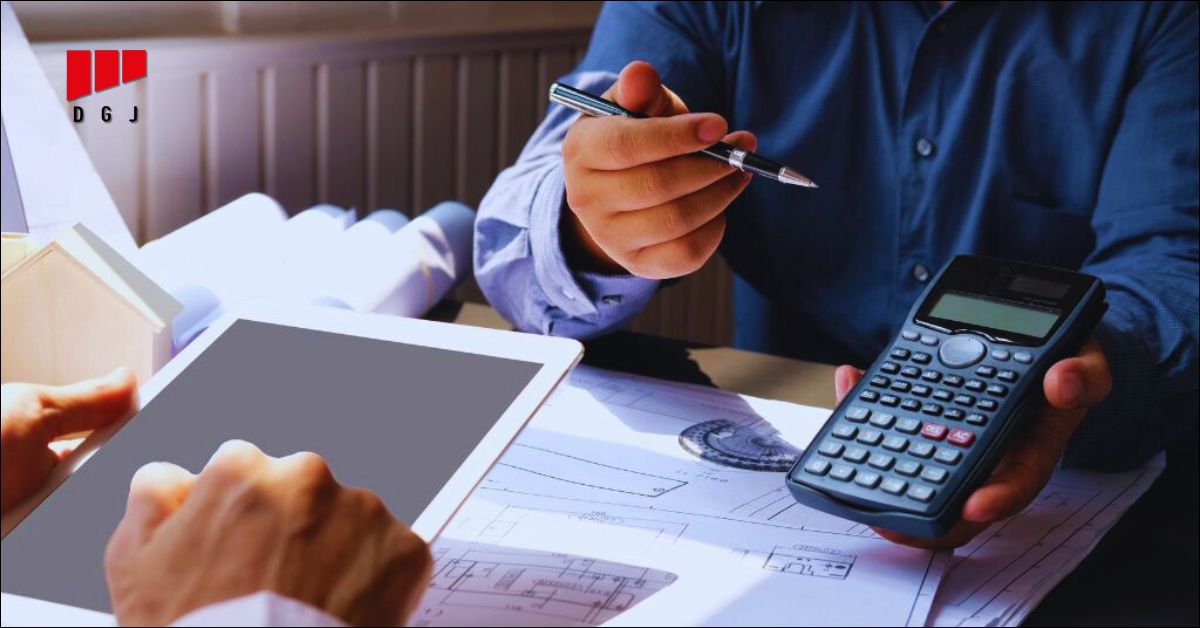
Construction is often viewed through a physical lens, with cranes, materials, and workforce activity taking centre stage. However, behind every successful project lies a disciplined financial framework that determines whether the build delivers value or becomes a liability. This is where cost control plays a critical role.
So, what is cost control in construction? It is the structured process of planning, monitoring, and regulating project expenditure to ensure that actual costs align with the approved budget while maintaining quality, scope, and programme expectations. Rather than simply reducing expenses, cost control focuses on achieving financial precision and accountability throughout a project's lifecycle.
In a global construction environment shaped by volatile material prices, labour shortages, regulatory complexity, and economic uncertainty, cost control is no longer optional. It is a strategic necessity that separates high-performing projects from those that fail to meet expectations.
To properly understand cost control in construction, it is important to distinguish it from related concepts such as cost estimation and cost management.
Cost estimation is the process of forecasting a project's expected cost based on drawings, specifications, and historical data. Cost management is the broader discipline encompassing planning, estimating, budgeting, financing, funding, and controlling costs throughout the project lifecycle.
Cost control, by contrast, focuses specifically on the execution phase. It ensures that spending remains aligned with the approved budget by continuously tracking actual costs, identifying variances, and implementing corrective measures.
In practical terms, cost control answers three key questions:
This ongoing process enables project teams to respond to real-world changes while protecting financial outcomes.
Understanding what cost control in construction is becomes more meaningful when considering its impact on real projects.
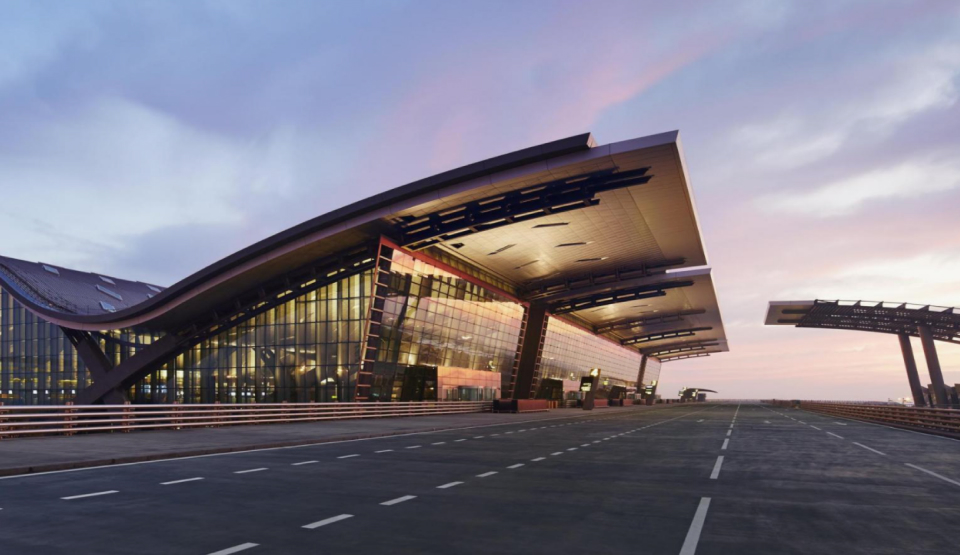
Large-scale developments such as international airports, hospitals, and mixed-use master plans involve significant capital investment and complex stakeholder structures. Without strong cost control, even well-designed projects can suffer from budget overruns, delays, and reputational damage.
For example, a major infrastructure project with a budget of £500 million can quickly face financial strain if material costs increase by 10%without proactive monitoring and adjustment. Cost control ensures that such risks are identified early and managed effectively.
The importance of cost control extends beyond large projects. Residential developments, commercial buildings, and public sector works all rely on disciplined financial management to ensure viability and stakeholder confidence.
Key reasons cost control is essential include:
For organisations seeking long-term success, cost control is not just a technical function. It is a core driver of credibility and competitive advantage.
A robust cost control framework is built on four interconnected components that guide financial performance throughout the project lifecycle.
Budgeting forms the foundation of cost control. It involves developing a detailed financial plan that accounts for all project elements, including labour, materials, equipment, overheads, and contingency allowances.
A well-structured budget provides a clear baseline against which actual performance can be measured. The more detailed and accurate the budget, the more effective the cost control process will be.
Monitoring involves tracking actual expenditure in real time and comparing it with the planned budget. This process allows project teams to identify discrepancies early and take corrective action before issues escalate.
Modern tools such as Building Information Modelling and cloud-based project management platforms enable accurate and timely data collection, improving visibility across all cost categories.
Transparent reporting is essential for maintaining stakeholder confidence. Regular financial reports should provide clear insights into current spending, budget variances, and projected outcomes.
Effective reporting does more than present figures. It explains trends, highlights risks, and supports strategic decision-making at every level of the project.
Construction projects are inherently dynamic. Changes in design, scope, market conditions, or site constraints can affect costs at any stage.
Cost control requires a flexible approach that allows for adjustments while maintaining overall financial discipline. This includes revising budgets, reallocating resources, and implementing mitigation strategies to keep the project on track.
Understanding what cost control in construction is becomes more actionable when supported by practical strategies. The following techniques are widely used by experienced professionals to maintain financial control.
Effective cost control begins before construction starts. Detailed planning includes feasibility studies, risk assessments, procurement strategies, and programme development, all aligned with financial objectives.
Reliable cost estimates are critical for establishing a realistic budget. This involves breaking down each project element and using data-driven methods to forecast costs with precision.
Periodic reviews of project expenditure help identify discrepancies between actual and planned costs. These audits act as checkpoints that ensure financial discipline is maintained.
As projects evolve, initial assumptions may change. Regularly revisiting and updating the budget ensures it remains relevant and aligned with current conditions.
Technology plays a central role in modern cost control. Software solutions enable real-time tracking, automated reporting, and improved collaboration among stakeholders.
Analysing historical data allows project teams to anticipate potential risks and cost overruns. Predictive models can identify patterns and suggest proactive measures.
Artificial intelligence enhances cost control by processing large datasets to generate accurate forecasts and simulate different scenarios. This supports better planning and decision-making.
Changes are inevitable in construction projects. A formal change control process ensures that all modifications are evaluated for cost, time, and impact before approval.
Despite its importance, implementing cost control is not without challenges. Understanding these obstacles is essential for developing effective mitigation strategies.
Common challenges include:
A historical example often cited is the prolonged construction of the Sagrada Família in Barcelona. Although unique in its circumstances, it illustrates how evolving scope, funding constraints, and leadership changes can impact cost and timeline control.
Modern projects must address these challenges through proactive planning, strong governance, and clear communication.
A disciplined approach to cost control delivers significant benefits that extend beyond financial performance.
By minimising waste and avoiding overruns, projects can achieve better financial outcomes without compromising quality.
Consistently delivering projects on time and within budget strengthens a company’s reputation and credibility in the market.
Transparent cost management builds trust among clients, investors, and partners, leading to stronger relationships and future opportunities.
Organisations known for financial discipline are more likely to succeed in competitive tendering processes.
Effective cost control contributes to organisational resilience, enabling firms to navigate economic uncertainty and sustain growth.
The intricate world of construction is firmly anchored on the bedrock of cost control. As the tales of towering architectural achievements and transformative urban projects unfold, it becomes evident that comprehending the essence of "what is cost control in construction?" transcends mere numerical evaluations.
It encapsulates vision, meticulous planning, and an unwavering dedication to delivering unparalleled value. If you aim for excellence in your construction endeavours and seek mastery over cost management, don't hesitate.
Contact DG Jones & Partners today and discover how we can be the catalyst for your project's success.
Cost control in construction refers to the systematic approach of managing and controlling the expenses of a project, ensuring it stays within the budgeted amount. It encompasses monitoring actual costs, comparing them with budgeted figures, and adjusting as needed.
Cost control is crucial because it ensures a project remains financially viable and profitable. Effective cost control prevents overruns, ensures efficient resource utilization, and helps deliver quality projects within the stipulated budget.
While cost control focuses on keeping expenses within the budget, cost management is a broader concept. Cost management includes planning, estimating, budgeting, financing, funding, managing, and controlling costs to complete a project within the approved budget.
The fundamental components of cost control are budgeting, monitoring, reporting, and adjusting. These steps ensure that the project's expenses are planned correctly, tracked in real-time, communicated to stakeholders, and adjusted proactively to prevent overruns.
Modern technology revolutionizes cost control, including software platforms, AI, and predictive analytics. These tools offer real-time budget tracking, more accurate forecasts, and automated alerts for potential overruns, making cost control more efficient and precise.