- À Propos De Nous
- Services & Secteurs
- Projets
- Nos Employés
- Perspectives
- Carrières
- Académie DGJ
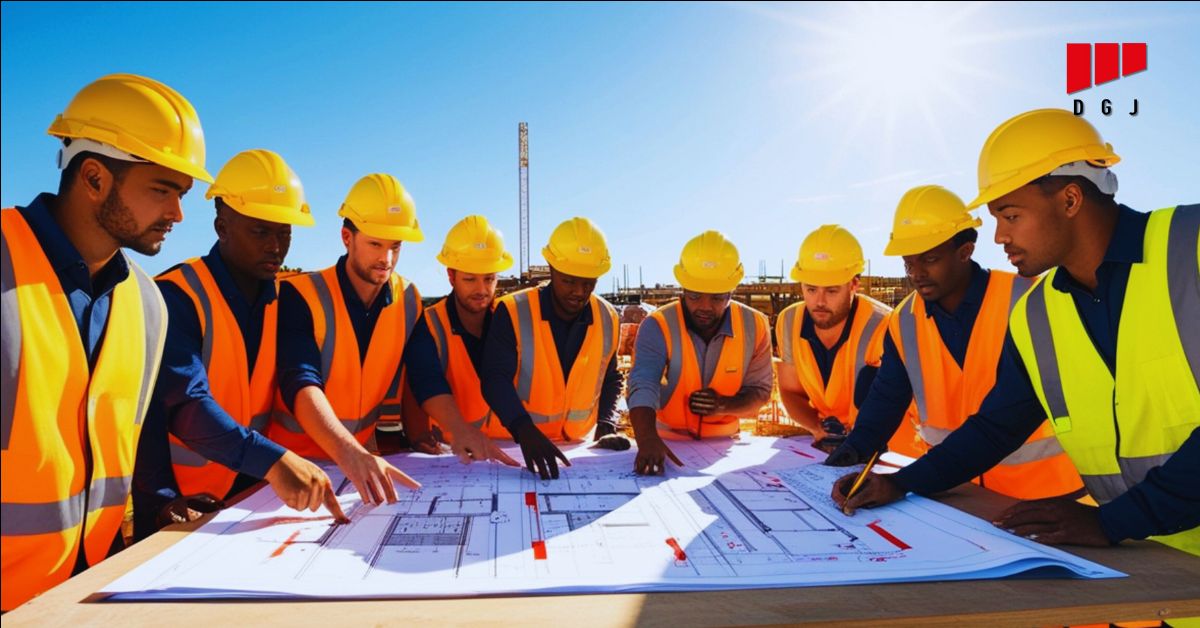
Construction project challenges are an ongoing concern across the British construction sector. From housing developments and education facilities to hospitals, transport schemes, commercial properties and major infrastructure projects, successful delivery depends on controlling numerous moving parts at the same time.
A project can begin with a strong vision, an approved budget and an experienced team, yet still face unexpected pressure once work starts on site. Cost increases, programme delays, safety concerns, communication gaps and quality failures can all affect delivery. If they are not identified and managed early, these issues can place strain on budgets, damage stakeholder confidence and affect the long-term value of the completed asset.
For public-sector bodies, private developers, institutions and investors, the stakes are particularly high. Construction projects often involve substantial capital investment, complex planning requirements, multiple contractors and a wide range of technical, legal and operational considerations. Clear governance and independent oversight are therefore essential.
Professional construction management services provide the structure, transparency and practical control needed to overcome these obstacles. By managing risk throughout the asset lifecycle, from early feasibility and procurement through construction and handover, an experienced consultancy can help protect the client’s investment, reputation and project objectives.
This guide explores five of the most common construction project challenges and explains how construction management services can help solve them.
Construction projects are rarely simple. Even a relatively modest development requires coordination between clients, architects, engineers, quantity surveyors, contractors, suppliers, statutory bodies and specialist consultants. On larger schemes, that network becomes significantly more complex.
While every project has its own requirements, five construction project challenges appear repeatedly across the sector:
These issues are closely connected. A delay in the delivery of key materials, for example, can affect the programme, increase preliminaries, create pressure on labour resources and lead to rushed work. Poor communication about a revised design detail can result in incorrect installation, rework, delays, and additional costs.
The effect is not limited to the construction phase. A poorly managed project can create defects, maintenance issues, operational disruption and reputational risk long after practical completion. This is why construction project challenges should not be viewed as isolated site issues. They require a coordinated, whole-project response.
DG Jones & Partners supports clients with independent, ethics-driven advice that brings clarity to complex project environments. By combining cost management, project management, technical advisory services and dispute resolution expertise, the consultancy helps clients make informed decisions with confidence at every stage.
Budget overruns are among the most common challenges in construction projects. They can occur on projects of every scale, from a local redevelopment scheme to a major public infrastructure programme.
A budget may be approved during the early stages of a project, but the financial position can change quickly once detailed design, procurement and construction are underway. Without strong cost planning and disciplined change control, expenditure can exceed expectations before the client has a clear view of the developing risk.
Common causes of construction cost overruns include:
The challenge is not simply spending more money. It is maintaining visibility and control as the project evolves. Clients need to understand what has changed, why it has changed, what it will cost and whether the change is necessary to meet the project’s strategic objectives.
Effective cost control begins long before construction starts. A professional construction management team develops a robust financial framework that reflects the project scope, market conditions, programme requirements and risk profile.
Key cost-management measures include:
Independent cost advice is particularly valuable where a client needs assurance that decisions are based on the project’s best interests rather than supply-chain preference. A consultancy that operates independently from contractors and suppliers can provide objective recommendations, challenge assumptions and ensure that cost decisions are properly documented.
At DG Jones & Partners, cost management is not solely about reducing expenditure. It is about helping clients achieve the best possible value from their investment. This means balancing cost with quality, programme, sustainability, lifecycle performance and operational needs.
For example, selecting a lower-cost material may appear beneficial during procurement. However, if that material has a shorter lifespan, higher maintenance requirements, or poorer environmental performance, it may lead to greater costs over the asset's life. A well-managed project considers the broader financial picture, not just the initial construction price.
By bringing financial discipline into the earliest stages of planning and maintaining it through to completion, construction management services can turn budget uncertainty into a manageable, transparent process.
Programme delays are another major source of concern for clients and stakeholders. A delayed project may affect funding arrangements, operational opening dates, tenant agreements, public commitments and anticipated revenue. In some cases, delays can also lead to claims, disputes and increased costs across the supply chain.
Construction schedules can slip for many reasons. Some are foreseeable and can be managed through careful planning, while others emerge during the course of the work. The key is to identify potential disruptions early and respond before they become critical.
Common causes of programme delay include:
A programme is not merely a list of dates. It is the framework that connects every part of the project. Design information, procurement, mobilisation, site works, inspections, commissioning, and handover must be properly sequenced to achieve a reliable outcome.
Construction management teams help create realistic, coordinated programmes that reflect the project's actual complexity. Rather than relying on optimistic assumptions, they assess constraints, procurement lead times, labour availability, access requirements and dependencies between work packages.
A strong programme-management approach includes:
Digital planning tools can make this process more efficient by providing the project team with a shared view of progress, milestones, and outstanding actions. However, software alone does not solve programming issues. The value comes from experienced professionals who can interpret the information, challenge unrealistic forecasts and coordinate the right response.
An independent project manager also acts as a central point of accountability. They can bring consultants, contractors and client representatives together to address emerging problems quickly. This is especially important on complex projects where one delayed decision can affect several disciplines.
DG Jones & Partners helps clients maintain confidence and control by providing structured programme oversight from the earliest stages. The goal is not to eliminate every risk, as construction will always involve uncertainty. The goal is to create a project environment where risks are visible, decisions are timely and recovery action is taken before delays become unmanageable.
Health and safety is one of the most serious challenges in construction projects because it concerns the well-being of workers, visitors and the public. It also affects productivity, legal compliance, insurance, programme certainty and the reputation of everyone involved in the project.
Construction activity can involve work at height, excavation, lifting operations, temporary works, heavy plant, electrical installations, confined spaces and vehicle movement. Each of these activities requires robust planning, competent supervision and clear controls.
Typical causes of health and safety incidents include:
Health and safety must never be treated as a compliance exercise completed only to meet legal requirements. A safe project is usually a better-managed project. It demonstrates that responsibilities are understood, risks are controlled, and teams have the information they need to work properly.
Professional construction management services embed health and safety into the project’s governance, planning and day-to-day site activities. They support clients in establishing a clear safety culture from the outset, with defined responsibilities and measurable expectations.
Key safety-management activities include:
A strong safety culture encourages workers to raise concerns early rather than ignore hazards. It also ensures that site teams have the authority to stop unsafe work when necessary. This proactive approach can reduce incidents, minimise disruption and build trust across the project team.
DG Jones & Partners places professional integrity and client protection at the centre of its work. Through rigorous oversight and adherence to recognised standards, the team helps clients establish safe, compliant and well-governed construction environments.
The result is not simply a safer site. It is a greater assurance that the project is being managed responsibly, transparently and with respect for the people delivering it.
Many construction project challenges start with a communication failure. A missing drawing revision, unclear instruction, delayed approval or misunderstood responsibility can quickly create confusion on site.
Construction projects bring together professionals with different roles, priorities and technical specialisms. Architects focus on design intent, engineers on performance and safety, contractors on delivery, clients on outcomes and budget, and end users on functionality. Without a clear communication structure, these perspectives can become misaligned.
Communication breakdowns often lead to:
Poor communication is particularly damaging on projects involving multiple sites, international teams, public-sector stakeholders or specialist technical requirements. In these settings, a clear information-management process becomes essential.
Construction management services create the structure needed for effective communication. They establish how information will be shared, who is responsible for decisions, how changes will be approved, and where project records will be stored.
Practical communication measures include:
A well-managed communication process protects all parties. Clients receive clear visibility over progress and decisions. Contractors receive timely instructions. Consultants can resolve technical issues before they affect the site programme. Stakeholders can make informed choices using accurate, current information.
Construction management is therefore not just about monitoring physical works. It is about creating a dependable system of governance that keeps people aligned around the same objectives.
DG Jones & Partners acts as a trusted and independent adviser, helping clients navigate complex discussions with clarity and confidence. Its multidisciplinary approach enables technical, commercial and programme considerations to be addressed together, rather than in isolation.
For clients managing high-profile developments, this level of communication control can protect both the project outcome and the organisation’s reputation.
Quality issues can undermine even the most ambitious construction project. Poor workmanship, unsuitable materials, incomplete design information and weak inspection procedures can all result in defects that require correction.
Rework is expensive because it affects more than the defective item itself. It can delay subsequent trades, disrupt procurement, create waste, increase labour requirements, and damage relationships among project stakeholders. If defects are discovered late, the cost and disruption can be significantly greater.
Common causes of quality failures include:
Quality should be planned, monitored and evidenced throughout the project. It cannot be inspected into the finished building at the end of the programme.
Construction management teams support clients by establishing quality expectations early and ensuring they are maintained throughout design, procurement, construction, and handover.
A thorough quality-assurance process may include:
The objective is not to create unnecessary bureaucracy. It is to provide assurance that the completed asset performs as intended and meets the agreed standards of safety, durability, functionality and appearance.
For public buildings, healthcare facilities, airports, education schemes and other complex assets, quality management is particularly important because defects can affect users, operations and long-term maintenance obligations. An independent consultancy can help ensure that quality requirements are protected even where programme or commercial pressures increase.
DG Jones & Partners brings international experience and local market knowledge to the quality-management process. Its approach supports clients who require assets that meet rigorous standards while also considering sustainability, lifecycle performance and community value.
When quality is managed from the beginning, clients are better positioned to reduce defects, avoid unnecessary rework and achieve a more reliable final outcome.
The right construction management partner does more than coordinate meetings, review progress reports or monitor site activity. A capable consultancy provides independent advice that helps clients make decisions with confidence.
Independence is especially important when a project involves substantial investment, multiple procurement routes or complex stakeholder interests. Clients need to know that the advice they receive is objective, transparent and focused on protecting their interests.
DG Jones & Partners is an independent, ethics-driven construction consultancy that supports clients through the full built-asset lifecycle. The practice combines project and cost management, technical advisory expertise and dispute-resolution capability to help clients maintain control over time, cost and quality.
This approach provides several benefits:
With experience across airports, hospitals, universities, masterplans and other large-scale developments in more than 70 countries, DG Jones & Partners understands the demands of complex project delivery. Its local insight and international perspective help clients navigate changing market conditions while maintaining focus on their strategic goals.
While challenges in construction projects are common, they are by no means unavoidable. With the right support and structured oversight, many of these issues can be addressed early and even turned into opportunities to improve project delivery.
Professional construction management services bring clarity and discipline to every stage of the build. From managing budgets and timelines to coordinating teams and maintaining quality, a skilled construction management firm helps ensure that risks are mitigated and your objectives are met.
If you are preparing for a new construction project and want to avoid delays, cost overruns, or miscommunication, it may be time to bring in experienced support. A trusted construction management firm can give you the confidence that every aspect of your development is under control.
Contact DG Jones & Partners today to discuss how our expert construction management services can help your project succeed. Whether you are building in the private or public sector, our team is ready to support you from planning through to completion. Let us build your future together.
Budget overruns, delays, safety incidents, miscommunication, and quality control issues are among the most common challenges facing UK construction projects today.
Delays can be reduced by engaging a construction manager to coordinate trades, plan procurement effectively, and build realistic schedules based on current market conditions.
Yes, especially for complex or high-value projects. Construction managers provide oversight that helps reduce risk, control costs, and improve quality.
They are responsible for developing safety plans, training teams, conducting inspections, and ensuring compliance with health and safety laws.
Yes, through cost planning, contract negotiation, and ongoing cost control measures, they help manage budgets and reduce financial surprises.