- À Propos De Nous
- Services & Secteurs
- Projets
- Nos Employés
- Perspectives
- Carrières
- Académie DGJ
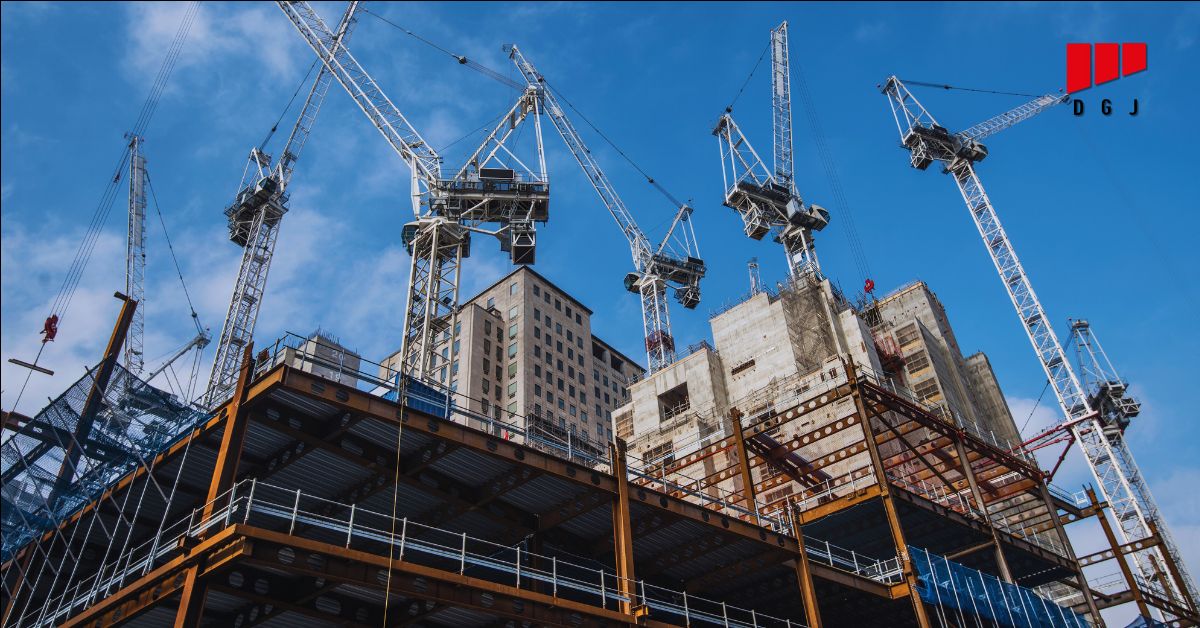
The construction management process provides the framework required to plan, coordinate, deliver and hand over a building project with confidence. It brings together people, information, budgets, programmes, procurement decisions and technical requirements so that every stage supports the client’s objectives.
For complex developments, effective management is not simply about overseeing on-site activity. It is about protecting the client’s investment, maintaining transparency, anticipating risk and ensuring that decisions are made with a clear understanding of their impact on cost, quality, time and long-term asset performance.
DG Jones & Partners provides independent, ethics-driven construction consultancy services that help public- and private-sector clients retain clarity and control throughout the built asset lifecycle. From early feasibility to final handover and beyond, our multidisciplinary teams combine international expertise, local market knowledge and rigorous professional standards to support successful project outcomes.
The construction management process is a structured approach to planning, organising, coordinating and controlling a construction project from initial concept through to completion, handover and the early operational period.
It typically covers several connected phases:
Each phase must work together. A decision made during early design, for example, can affect the project budget, procurement strategy, construction programme and future maintenance requirements. The construction management process provides a disciplined approach to identifying these connections early and making informed decisions before issues become costly or difficult to resolve.
A construction manager usually leads or coordinates this process on the client’s behalf. Their role is to bring together consultants, contractors, suppliers, authorities and stakeholders, ensuring that everyone is working towards the same approved scope, budget, programme and quality expectations.
The process can be used for many types of development, including commercial buildings, healthcare facilities, educational campuses, aviation projects, infrastructure schemes, residential developments, master plans, and major public assets.
Construction projects involve numerous moving parts. There may be multiple consultants, specialist subcontractors, suppliers, regulators, funders and user groups, all with different responsibilities and priorities. Without a clear management structure, small delays or unclear decisions can quickly affect the wider programme and budget.
A well-managed construction management process helps clients maintain oversight while ensuring that project teams can act efficiently. It gives every party a clearer understanding of who is responsible for what, when key decisions are needed and how performance will be measured.
The main benefits include:
For a client, the most important benefit is confidence. A robust process means that project decisions are supported by reliable information rather than assumptions. It also helps protect the client’s reputation by ensuring that the development is managed professionally, transparently and in line with agreed standards.
DG Jones & Partners operates independently of the supply chain, allowing us to provide objective advice focused on the client’s interests. This independence is particularly valuable on high-value or high-profile projects, where accountability, ethics and sound professional judgement matter at every stage.
Although a construction manager plays a central coordination role, the construction management process depends on collaboration between a range of specialist parties. Each party contributes knowledge essential to delivering a safe, compliant, and high-performing asset.
Key participants commonly include:
The construction manager acts as a link between these groups. They establish clear communication procedures, coordinate meetings, track actions and escalate issues when necessary. This structured approach reduces the risk of information being missed, duplicated or misunderstood.
For clients managing complex projects, the value of an experienced independent consultant lies in their ability to turn technical and commercial information into clear decisions. DG Jones & Partners supports this process with a focus on transparency, international quality benchmarks and local delivery knowledge.
The pre-construction phase is one of the most important stages in the construction management process. It is where the project team tests the proposal, develops the brief, coordinates the design, establishes the budget and identifies risks before physical work begins.
Strong pre-construction planning does not eliminate every challenge, but it significantly improves the project’s ability to respond to issues in a controlled manner.
The process commonly starts with a feasibility study. This assesses whether the project is practical, financially viable and aligned with the client’s wider objectives.
A feasibility assessment may consider:
The purpose is not only to decide whether the project can proceed, but also to determine the most appropriate route forward. A well-prepared feasibility study helps the client identify priorities early, whether these relate to budget certainty, speed of delivery, design quality, sustainability targets or future flexibility.
Once the project is considered viable, the client’s requirements are developed into a clear project brief. This should explain what the asset needs to achieve, who will use it, what standards it must meet and what constraints apply.
Architects and engineers then begin translating the brief into drawings, specifications and technical information. During this period, the construction manager reviews the evolving design from a delivery perspective.
This is often referred to as a constructability review. It involves considering whether the proposed design can be built safely, efficiently and within the available budget and programme. Early construction input can identify elements that may be difficult to procure, overly complex to build or likely to create maintenance issues later.
For example, a design solution may look visually effective but require a specialist material with a long lead time. By identifying this early, the team can either protect the programme through early procurement or consider a suitable alternative that meets the project’s performance and aesthetic requirements.
Cost planning provides the financial foundation for the project. The construction manager works closely with the quantity surveyor or cost consultant to prepare estimates that reflect the developing design, market conditions, procurement approach and anticipated risks.
A detailed cost plan may include:
The budget should be updated at key design stages, rather than treated as a one-off calculation. This allows the client to understand how design decisions affect affordability and to make choices before the project reaches the tender stage.
An independent cost and project management perspective helps clients maintain financial discipline without losing sight of quality, safety or long-term asset value.
Risk management is a continuous part of the construction management process, beginning long before contractors arrive on site. The project team identifies possible threats and opportunities, assesses their potential impact and agrees on actions to reduce, transfer, avoid or manage them.
Common risks at this stage include:
These risks are typically recorded in a risk register. Each item should have an owner, a proposed mitigation action, an assessment of likelihood and impact, and a review date. The register should be updated regularly as the project develops.
This disciplined approach gives the client better visibility of potential challenges and ensures that concerns are addressed before they become major problems.
The procurement strategy sets out how design, construction and specialist work packages will be obtained and contracted. The right approach depends on the project’s size, complexity, risk profile, budget certainty requirements and desired programme.
Common procurement routes include:
Each route involves different levels of client involvement, risk allocation and cost certainty. The construction manager helps the client understand these implications and choose a strategy that supports the project’s objectives.
Once the design and project information are sufficiently developed, the procurement phase begins. This part of the construction management process focuses on appointing contractors, suppliers and specialist subcontractors who can deliver the work to the required standards.
Tender documents must provide potential bidders with a clear and consistent basis for pricing and planning the work. If information is incomplete or ambiguous, contractors may make different assumptions, making bids difficult to compare fairly.
A tender package may include:
The construction manager works with the consultant team to ensure that the tender information is coordinated, complete and suitable for procurement.
Choosing the lowest bid is not always the best option. A strong procurement process considers overall value, delivery capability and risk, not price alone.
Contractor evaluation may include:
A transparent evaluation process is especially important for institutions, public bodies and major developers. It provides a documented basis for appointment and helps ensure that contractors are selected for their ability to deliver, not simply their initial cost.
Once a preferred contractor is identified, the final scope, programme, payment structure, and contract conditions are agreed upon. The contract should define the obligations of each party, including how changes, delays, quality issues and disputes will be handled.
Important contract elements include:
DG Jones & Partners supports clients by helping them maintain clarity during negotiations and ensuring that contractual arrangements reflect the project’s risk profile and governance requirements.
The construction phase is where plans become a physical asset. It is also the stage where effective management must translate into daily action, clear communication and disciplined control.
Before main construction works begin, the contractor prepares the site for safe and efficient operations. This is known as mobilisation.
Typical mobilisation activities include:
A carefully planned mobilisation period helps avoid early disruption and ensures that the site is ready for the workforce, materials and equipment required for the next stages.
During construction, the construction manager monitors progress against the agreed programme, budget and quality standards. They coordinate regular site meetings, review contractor reports, track key milestones and work with the team to resolve issues promptly.
Daily and weekly management activities may include:
Consistent reporting is essential. Clients should receive information that is accurate, timely and easy to understand, allowing them to make decisions with confidence. Project dashboards, action trackers and programme updates can provide useful visibility without overwhelming stakeholders with unnecessary detail.
Quality must be planned, checked and documented throughout the construction management process. Waiting until the end of the project to identify defects is inefficient and can lead to costly rework.
Quality management often includes:
The construction manager helps ensure that quality requirements are understood by all parties and that issues are addressed early. This protects the client’s investment and supports a smoother handover process.
Health and safety are fundamental responsibilities across every construction project. The construction manager works with the contractor and project team to ensure that safe working procedures are established, monitored and improved throughout the works.
Key activities can include site inductions, toolbox talks, risk assessments, method statements, safety inspections, incident reporting and emergency planning. In the United Kingdom, construction projects must comply with the duties set out in the Construction (Design and Management) Regulations 2015.
Safety management should not be treated as a separate administrative task. It must be integrated into planning, design coordination, logistics, site operations and contractor performance reviews.
Changes can arise for many reasons. The client may require an additional feature, a technical issue may emerge, a material may become unavailable, or a statutory authority may request a design amendment.
Without formal change control, these adjustments can lead to unclear responsibilities, budget pressure and disputes. A robust construction management process ensures that each proposed change is reviewed before it is implemented.
The review should consider:
Once approved, the change should be documented and reflected in the project records, budget and programme. This provides the client with a clear audit trail and ensures the project remains under control even as circumstances evolve.
The completion of building work does not mark the end of the construction management process. The final phase ensures that the completed asset performs as intended, that the client receives the necessary documentation and that any remaining issues are resolved.
Commissioning involves testing building systems to confirm that they operate correctly and meet the project requirements. Depending on the asset, this may include mechanical, electrical, fire, security, communications, access control and specialist systems.
The team will also prepare a snagging list, sometimes called a defects list. This records incomplete items, minor faults or workmanship issues that require correction before or shortly after handover.
A coordinated commissioning process is important because building systems often need to operate together. The goal is not only to confirm that individual components work, but also that the building functions safely, efficiently, and as designed.
At practical completion, the project is sufficiently complete for the client to take possession or begin using the asset, subject to any agreed outstanding items.
The handover package commonly includes:
The construction manager coordinates this information to ensure that the client has what they need to operate and maintain the asset effectively. A well-managed handover protects long-term asset performance and supports a smooth transition from construction to operation.
Most contracts include a defects liability period, commonly lasting between six and 12 months. During this time, the contractor remains responsible for correcting defects that become apparent after handover.
The construction manager tracks reported issues, coordinates inspections and monitors corrective work. At the end of this period, final inspections and contractual procedures are completed before final payments and close-out arrangements are concluded.
This continued oversight gives the client reassurance that post-completion issues will be managed properly and that the contractor’s obligations are fulfilled.
Digital tools can strengthen the construction management process by improving coordination, reporting speed, record-keeping, and decision-making.
Common technologies include:
Technology is most effective when supported by strong governance. Tools do not replace professional judgement, clear processes or accountable leadership. Instead, they provide better information and visibility for the people responsible for making decisions.
DG Jones & Partners combines established construction management disciplines with practical innovation, helping clients benefit from digital tools while maintaining focus on cost, time, quality, sustainability and operational value.
Complex projects require more than technical knowledge. They require an advisor who understands the importance of independence, ethics, local context and long-term client confidence.
DG Jones & Partners acts as a trusted partner throughout the built asset lifecycle. Our approach is rooted in clear communication, rigorous project controls and a commitment to protecting client interests at every stage of the construction management process.
We support clients by providing:
Whether you are delivering an airport, hospital, university, commercial development, masterplan or public infrastructure scheme, our teams help you maintain control over the decisions that matter most.
The construction management process is not only a method for delivering a building. It is a way to safeguard investment, manage risk and create assets that support organisations and communities over the long term. With the right independent advisor, clients can move from uncertainty to a clearer, more controlled path towards successful delivery.
The construction management process is a proven method for planning, delivering and completing building projects in a structured and efficient manner. It brings together the right people, tools and procedures to reduce risk, improve coordination and support informed decision-making at every stage.
By following each phase, such as pre-construction planning, procurement, execution and final handover, the process helps make sure that projects are delivered on time, within budget and to the expected quality.
If you are preparing to start a new project and want to approach it with confidence, contact DG Jones & Partners to learn how our construction management services can help you stay in control and achieve successful outcomes.
The construction management process is a structured approach for planning, organising, and delivering building projects from start to finish. It covers all key stages, including design review, procurement, site supervision and project handover.
It helps reduce risks, control costs, and maintain quality across every phase of a project. By following a clear process, teams can make better decisions, avoid delays and complete work more efficiently.
A construction manager usually leads the process, acting on behalf of the client to coordinate all teams and oversee daily progress. They work closely with designers, contractors, suppliers and regulatory bodies to keep the project on track.
Ideally, the construction manager should be involved during the early planning or design phase. Early involvement allows them to identify potential risks, provide cost advice and contribute to a more buildable design.
Modern tools such as BIM, drones, and project dashboards help improve communication, track progress, and reduce errors on-site. These technologies make the construction management process more transparent and responsive to real-world challenges.