- À Propos De Nous
- Services & Secteurs
- Projets
- Nos Employés
- Perspectives
- Carrières
- Académie DGJ
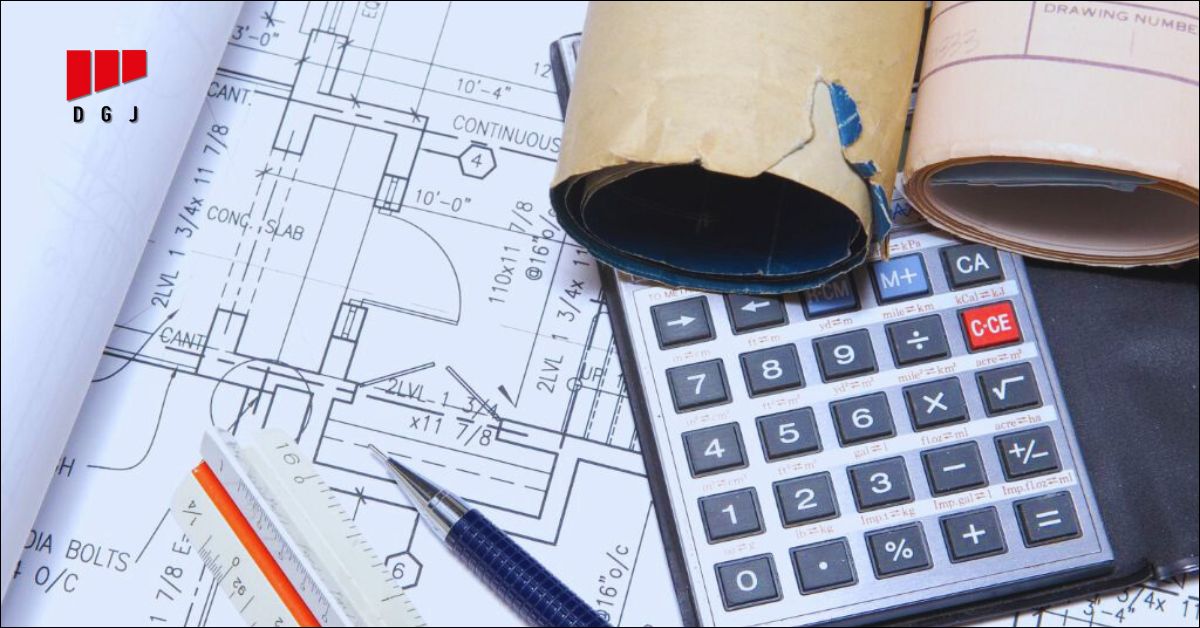
Construction projects are often judged by what can be seen: steel frameworks, cranes on skylines, and buildings rising from the ground. However, behind every successful development lies a far more intricate discipline that determines whether a project succeeds or fails financially. That discipline is labour and material cost management.
In today’s construction environment, where margins are tight and expectations are high, labour and material cost management is not simply an administrative function. It is a strategic capability that underpins project viability, investor confidence, and long-term asset performance. When executed effectively, it ensures that developments are delivered not only on time and within budget but also to the highest standards of quality and sustainability.
For developers, public institutions, and private investors alike, the ability to manage labour and material costs with precision is what transforms complex projects into controlled, predictable, and successful outcomes.
At its core, labour and material cost management involves planning, monitoring, and optimising two of the most significant cost drivers in construction projects. These are the workforce required to deliver the project and the materials needed to build it.
However, the reality is far more nuanced than simply tracking wages and procurement expenses.
Labour costs extend beyond hourly rates or salaries. They include indirect labour such as supervisors, project managers, and administrative staff. They also encompass pensions, insurance contributions, training investments, compliance costs, and productivity-related inefficiencies. Without a comprehensive understanding of these elements, budgets can quickly become inaccurate and misleading.
Material costs are equally complex. While primary materials such as concrete, steel, and timber dominate budgets, secondary factors often go unnoticed. These include transportation, storage, handling, waste, theft, and even environmental exposure. Small inefficiencies across these areas can accumulate into significant financial losses.
Effective labour and material cost management, therefore, requires a holistic approach. It demands visibility, foresight, and disciplined execution across every stage of the construction lifecycle.
One of the most common challenges in labour and material cost management is the tendency to underestimate the full cost equation. Surface-level budgeting often fails to capture hidden or indirect costs, which can erode profitability over time.
For labour, hidden costs may include:
For materials, overlooked costs frequently involve:
When these factors are not accounted for, project budgets may appear viable on paper but become unsustainable in practice.
This is why leading construction consultancies prioritise transparency and detailed cost modelling. By identifying and quantifying both direct and indirect costs, they provide clients with a clearer, more reliable financial picture from the outset.
Labour is often perceived as a fixed cost in construction, but this assumption can be misleading. In reality, labour costs are highly variable and can be optimised through strategic planning and operational efficiency.
Improving productivity is one of the most effective ways to enhance labour and material cost management. A well-trained and properly equipped workforce can deliver more output in less time, reducing overall labour expenditure without compromising quality.
For example, investing in training programmes or modern construction techniques can significantly reduce errors and rework. Over time, these improvements translate into measurable cost savings and stronger project performance.
Efficient labour allocation ensures that the right people are deployed at the right time. Poor scheduling often leads to idle workers or rushed activities, both of which increase costs.
Carefully planned workflows help maintain consistent productivity levels while avoiding unnecessary overtime. This not only reduces financial strain but also improves workforce wellbeing and safety.
Overtime can be a useful tool when used sparingly, particularly to recover from unexpected delays. However, excessive reliance on overtime can quickly inflate labour costs and lead to fatigue-related errors.
Projects that prioritise structured scheduling and realistic timelines tend to achieve better outcomes. They minimise reactive decision-making and create a more stable and predictable working environment.
Material cost management is often reduced to purchasing decisions, but this perspective is too narrow. True optimisation involves controlling the entire lifecycle of materials from procurement to installation.
While bulk purchasing can offer cost advantages, it must be approached carefully. Overstocking can lead to storage issues, material degradation, and cash flow constraints.
A more effective strategy is to align procurement with project phases. This ensures that materials arrive when needed, reducing storage requirements and minimising waste.
Selecting cheaper materials may appear to reduce costs initially, but it often results in higher long-term expenses. Inferior materials can lead to defects, increased maintenance, and potential reputational damage.
High-quality materials, on the other hand, contribute to durability, safety, and lifecycle performance. In the context of labour and material cost management, this balance between cost and quality is critical.
Accurate inventory management is essential for controlling material costs. Techniques such as just-in-time delivery can reduce waste and improve efficiency, provided that supply chains are reliable.
Waste reduction should also be treated as a strategic priority. Even small reductions in material waste can produce significant financial savings across large-scale projects.
The construction industry is undergoing a digital transformation, and this shift is redefining how labour and material cost management is executed.
Modern estimation software uses historical data, real-time inputs, and predictive analytics to generate more accurate cost forecasts. This reduces uncertainty and enables better decision-making during the planning phase.
Digital platforms provide real-time visibility into project performance. They allow stakeholders to track labour hours, material usage, and cost variations in a centralised system.
This level of transparency improves coordination and allows teams to address issues before they escalate into major problems.
Emerging technologies such as blockchain are beginning to enhance transparency within construction supply chains. By providing verifiable records of transactions and deliveries, these systems can reduce disputes and improve accountability.
Although still developing, these innovations are expected to play an increasingly important role in labour and material cost management in the coming years.
In a construction landscape defined by complexity and risk, having the right advisory partner can make a critical difference.
DG Jones & Partners is an independent, ethics-driven consultancy that provides clarity and control across the entire built asset lifecycle. With extensive international experience and deep local insight, the firm supports clients in navigating the challenges of labour and material cost management with confidence.
By adhering to globally recognised standards such as RICS and ISO, and maintaining independence from the supply chain, DG Jones & Partners ensures that client interests remain protected at every stage. This independence fosters transparency, reduces risk, and enables more informed decision-making.
From major infrastructure developments to high-profile commercial projects, the firm’s multidisciplinary expertise allows it to deliver consistent results across diverse sectors and geographies.
For clients, the value lies not only in cost optimisation but also in the assurance that their investments are managed with integrity, professionalism, and long-term vision.
Labour and material cost management is no longer a back‑office exercise. It is a core strategic capability that determines whether complex construction and infrastructure projects are delivered on time, within budget, and in accordance with recognised international standards. When developers and institutions take control of these costs with the same rigour they apply to design and stakeholder engagement, they gain clearer visibility of risk, stronger financial performance, and assets that better serve communities over the long term.
DG Jones & Partners exists to provide that level of confidence, clarity, and control. As an independent, ethics‑driven consultancy, we help clients navigate opaque contractor relationships, fragmented supply chains, and technical uncertainty with transparent, data‑led advice guided by RICS and ISO standards. Our global experience, combined with deep local market insight, allows us to optimise labour and material cost management across airports, hospitals, universities, masterplans, and other high‑profile infrastructure projects in more than 70 countries.
For risk‑aware public and private clients, choosing DG Jones & Partners is about more than managing a budget. It is about engaging a principled, globally connected advisor who protects both investment and reputation whilst advancing sustainability, community impact, and long‑term asset performance. If you are planning a complex infrastructure project and want every pound of labour and material spent to work harder for your outcomes, contact DG Jones & Partners today to see how we can help you succeed and build with greater confidence, transparency, and control.
Labour cost management in construction involves planning, monitoring, and controlling the cost of labour for a construction project. It ensures that the work is completed within the allocated budget and time frame, optimising productivity and minimising waste of resources.
Effective management of material costs starts with accurate budgeting and procurement planning. This involves negotiating prices with suppliers, buying in bulk where possible, and storing materials properly to avoid damage and waste. Regular audits and inventory checks are essential for monitoring usage and preventing theft or misallocation.
To reduce labour costs, project managers can optimise scheduling to avoid overtime, use labour-efficient building techniques and technologies, and ensure proper training and equipment are available to maximise worker productivity. Additionally, employing a skilled labour force can improve efficiency and lower the risk of costly mistakes.
Preventing cost overruns in materials generally requires thorough upfront planning, including a detailed project scope and a well-researched budget. Continuously monitoring on-site material use through inventory management systems and maintaining strong relationships with suppliers to secure favourable pricing terms are critical strategies. Adjustments to the plan and budget should be made promptly as unexpected issues arise.