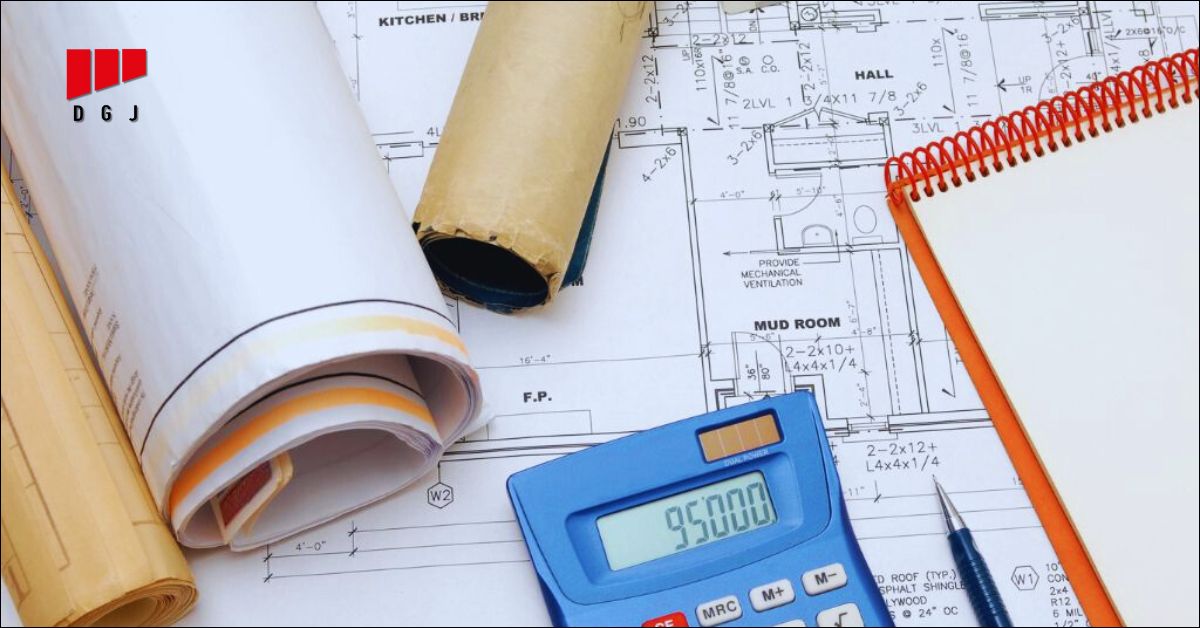
In the built environment, success is often measured by architectural excellence, structural integrity, and timely delivery. However, behind every successful project lies a critical yet often understated discipline: the construction estimating process. This process forms the financial backbone of any development, ensuring that ideas are not only visionary but also viable.
The construction estimating process is far more than a technical exercise. It is a strategic function that shapes decisions from concept through to completion. Accurate estimating builds confidence among stakeholders, supports funding approvals, and establishes a clear roadmap for procurement and delivery.
For organisations seeking clarity, control, and confidence in complex developments, a robust construction estimating process becomes indispensable. It enables informed decision-making while safeguarding financial outcomes in an industry where uncertainty is constant.
At its core, the construction estimating process involves forecasting the total cost required to complete a project. While this may appear straightforward, the reality is far more nuanced. Estimating is not about predicting exact outcomes. It is about managing uncertainty using data, expertise, and professional judgement.
The process requires a detailed review of design documentation, project scope, and site conditions. It also involves analysing supply chains, labour requirements, and material costs while factoring in risks and external variables. When executed effectively, the construction estimating process becomes a strategic tool that guides clients towards financially sound decisions.
For experienced consultants, estimating is both an analytical and advisory discipline. It translates complex project variables into clear financial insights, enabling clients to proceed with confidence and control.
Within the construction estimating process, the estimator plays a central and highly influential role. Far from being limited to calculations, estimators act as strategic advisors who influence project feasibility and direction from the earliest stages.
They collaborate closely with architects, engineers, and project managers to ensure that cost considerations are embedded within design development. As designs evolve, estimators continuously refine cost forecasts to reflect changes in scope, market conditions, and project risks.
This ongoing involvement ensures cost control is proactive rather than reactive. Estimators identify potential issues early, allowing stakeholders to address challenges before they escalate. In this way, the construction estimating process becomes a continuous and dynamic function rather than a one-off task.
For clients navigating complex developments, this level of insight is essential in maintaining alignment between vision, budget, and delivery.
The construction estimating process typically progresses through several stages, each serving a specific purpose within the project lifecycle.
Each stage contributes to a more refined understanding of project costs. Together, they form a structured and progressive construction estimating process that supports informed decision-making at every phase.
Before detailed calculations begin, the construction estimating process requires thorough preparation. This pre-estimation phase is critical in ensuring that all subsequent cost assessments are based on accurate and complete information.
Estimators begin by analysing architectural drawings, technical specifications, and planning requirements. This ensures a clear understanding of the project scope and identifies any inconsistencies or gaps in the documentation.
A site visit provides valuable insights that cannot be captured through drawings alone. Factors such as terrain, accessibility, existing infrastructure, and environmental constraints can significantly influence costs.
Collaboration with the design team is essential to resolve ambiguities and confirm project requirements. Clear scope definition reduces the risk of costly misunderstandings later in the process.
By investing time in this foundational stage, the construction estimating process becomes more reliable and aligned with project realities.
The construction estimating process involves several key steps that transform project information into a structured cost plan.
Estimators conduct detailed take-offs to determine the quantities of materials required. This includes everything from structural components to finishes. Accuracy at this stage is essential, as even small errors can have significant financial implications.
Labour is one of the most variable elements in construction. Estimators analyse wage rates, productivity levels, and workforce availability to develop realistic cost projections. These calculations must also consider local regulations and market trends.
The selection and costing of equipment are crucial to the construction estimating process. This includes assessing the need for machinery such as cranes, excavators, and scaffolding, along with associated operational and maintenance costs.
Specialist subcontractors are integral to most projects. Estimators obtain and evaluate quotations, ensuring that scopes are aligned and pricing is competitive. Benchmarking against similar projects helps validate these costs.
Indirect costs such as site management, utilities, insurance, and health and safety provisions must be carefully calculated. These elements are often overlooked but are essential for a comprehensive estimate.
No construction project is free from risk. The construction estimating process incorporates contingency allowances to account for unforeseen events. These allowances are based on risk assessments and help protect the project from financial disruption.
Advancements in technology have significantly enhanced the construction estimating process. Digital tools and software platforms enable greater accuracy, efficiency, and collaboration.
Modern estimating solutions allow professionals to integrate cost data with 3D models, automate calculations, and update estimates in real time. This improves both speed and precision while reducing the likelihood of errors.
However, technology does not replace professional judgement. Experienced estimators use these tools to support their expertise, ensuring that outputs remain grounded in practical knowledge and market understanding.
In addition, digital platforms facilitate collaboration across project teams. By ensuring that all stakeholders work from consistent data, the construction estimating process becomes more transparent and aligned.
Leading consultancies distinguish themselves through their approach to construction estimating. Accuracy alone is not sufficient. A strategic and transparent methodology is equally important.
Comparing costs against similar projects provides valuable context. Effective benchmarking considers location, complexity, and current market conditions to produce meaningful insights.
Estimates should evolve alongside the project. Regular updates ensure that cost plans remain aligned with design developments and market changes.
Rather than relying on generic contingencies, advanced approaches involve detailed risk modelling. This enables more precise allocation of allowances and supports proactive mitigation strategies.
Clear and open communication is essential. Clients must understand not only the estimated cost but also the assumptions and risks underlying it. Transparency builds trust and supports better decision-making.
Construction, by nature, is full of unknowns—weather patterns, political shifts, supply disruptions, and design revisions. However, through a robust construction estimating process, these uncertainties can be managed.
Estimators help create the financial scaffolding upon which entire projects rest. They turn vague ideas into priced realities, translating vision into viable contracts. And while their work may often remain behind the scenes, its impact is profound and enduring.
If you're embarking on a project where cost certainty matters—and it always does—we invite you to connect with our DG Jones & Partners team. Let us help you navigate the complexities of construction estimating with clarity, confidence, and the assurance of decades of experience behind every figure.
Contact us today to see how our cost management services can support your vision from blueprint to build.
The first step is to thoroughly review and understand the project plans and specifications. This involves assessing the scope of work, identifying key tasks, and clarifying any ambiguities to ensure an accurate estimate.
Site inspections are crucial as they provide firsthand insight into the project environment, uncover potential challenges, and help assess site conditions that may affect the project scope and cost.
Accuracy is ensured by using up-to-date cost data, consulting suppliers for current material prices, and analysing historical labour rates and productivity data. Detailed itemisation and cross-referencing with similar projects also help in achieving precision.
Technology, such as estimating software and digital tools, streamlines the process by providing accurate cost databases, automating calculations, and enabling easy updates to estimates. It enhances efficiency, reduces errors, and improves collaboration among team members.
Managing risk involves identifying potential issues early, incorporating contingency allowances, and conducting a thorough risk assessment. Best practices include setting aside a percentage of the total budget for unforeseen expenses and regularly reviewing and adjusting the estimate as the project progresses.