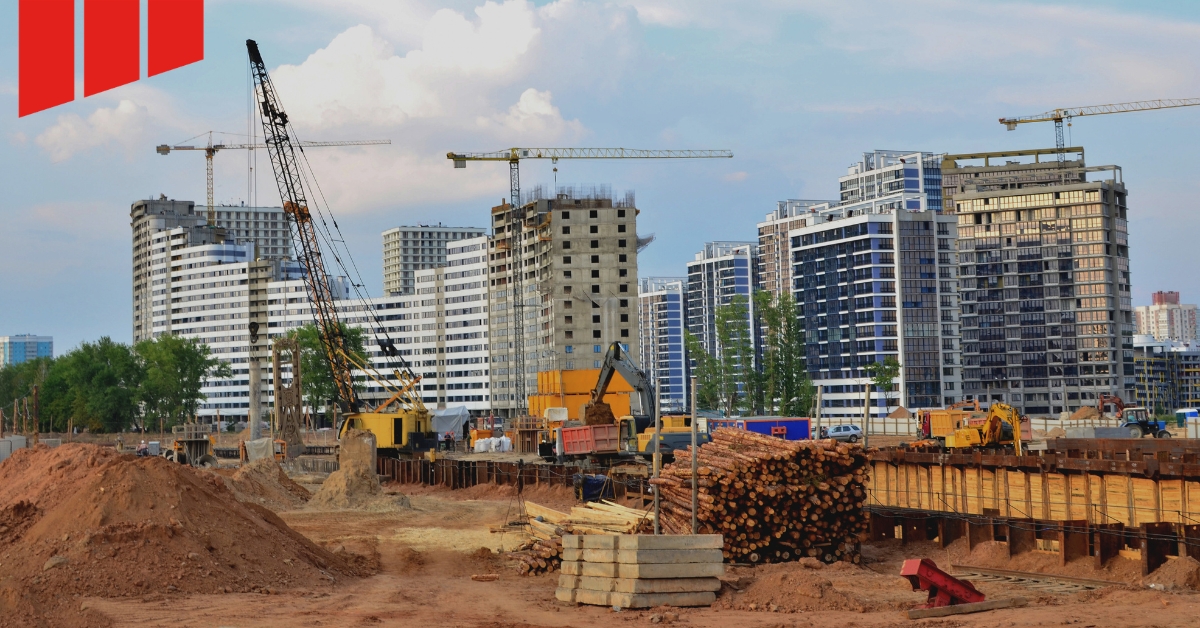
 For many stakeholders in Greece’s construction sector, cost management remains a little-known discipline. Yet as the country enters a new phase of large-scale development, the need for more substantial cost control is becoming increasingly clear. Without structured oversight, even promising projects risk delays, budget overruns, and unclear decision-making.
Cost management is the structured process of planning, estimating, budgeting, and controlling costs throughout a construction project's lifecycle. It ensures that spending aligns with project goals, scope, and available resources. While this may seem like common sense, many projects proceed without formal systems in place, leaving owners vulnerable to escalating costs and unclear pricing.
A dedicated cost manager brings discipline to this process. Their role is to track financial performance, assess contractor bids, validate changes, and provide ongoing advice on managing costs more effectively. This goes well beyond basic accounting. A cost manager serves as a strategic advisor, using data and benchmarks to guide decision-making.
Across much of Greece’s construction market, projects often move forward without formal, independent cost oversight. In many cases, pricing, scope clarification, and change proposals are led by contractors or design teams directly. While this approach may appear efficient in the early stages, it introduces inherent uncertainty into financial decision-making.
Without an independent cost consultant, project owners are frequently required to assess technical and commercial decisions without a clear cost benchmark. As a result, it becomes difficult to distinguish between essential scope, discretionary enhancements, and cost exposure driven by construction methodology or sequencing choices.
As projects progress, this lack of structure compounds. Design refinements, material substitutions, and programme adjustments are often introduced incrementally. These changes may appear manageable. However, when pricing is not tested independently or tracked against an agreed baseline, cumulative impact is rarely visible until budgets are already under pressure.
Moreover, when cost data is fragmented or inconsistently reported, accountability becomes blurred. Owners may struggle to trace why budgets have shifted, whether risks were anticipated, or which decisions drove escalation. Over time, this erodes financial confidence, strains project relationships, and limits the ability to respond proactively.
Introducing formal cost management early in the project lifecycle helps avoid these pitfalls. From feasibility studies and budget setting to procurement support and progress valuation, a cost manager adds value at every stage.
Crucially, this is not about limiting design ambition. Instead, it’s about making decisions with full awareness of their cost implications. A skilled cost manager will work closely with architects, engineers, and contractors to ensure creative solutions align with budget goals. They also offer independent checks on pricing, assess value for money, and provide risk-adjusted forecasts, giving clients a clear roadmap through uncertainty.
As Greece’s construction industry scales up, especially in infrastructure, hospitality, and urban development, project complexity and financial exposure are rising. Global investors, international consultants, and significant development firms increasingly expect transparent, structured cost control.
By adopting global best practices in cost management, Greek developers and public entities can attract more investment, build better partnerships, and deliver projects with confidence. It’s not just about protecting the bottom line. It’s about building trust, quality, and long-term value.
In Greece’s evolving construction landscape, the transition from traditional, contractor-led pricing to structured, independent oversight is essential for long-term success. As projects grow in scale and complexity, the risk of budget overruns and lack of financial transparency becomes a significant liability. Implementing formal cost management is not just a defensive measure. It is a strategic necessity that ensures every euro invested translates into measurable project value.
For over six decades, DG Jones & Partners has been a global leader in construction cost consultancy, delivering a world-class standard of financial rigor to major developments worldwide. Our expert teams offer a comprehensive suite of services tailored to the specific needs of the Greek industry, including independent feasibility studies, robust procurement support, and accurate progress valuations. Whether you are managing a boutique luxury development or a large-scale infrastructure project, we ensure your financial interests are safeguarded throughout the entire project lifecycle.
For further insight into how structured cost management can support informed decision-making on your project, speak with a DG Jones & Partners specialist in your region.